OSHA 29 CFR 1926.250 requires that structural steel, poles, pipe, bar stock, and similar cylindrical materials be racked or properly blocked to prevent spreading or tilting. Floor stacking these items isn't just inefficient — in many cases, it puts you out of compliance.
Cantilever racking solves this problem. This guide covers what cantilever racking is, its real advantages and limitations, when it makes sense, and how it stacks up against pallet racking — so you can make a confident decision before you commit budget.
Key Takeaways
- Cantilever racking stores long, non-palletized materials (pipe, lumber, bar stock, sheet metal, furniture) that standard pallet racks can't handle
- The open-front design eliminates column obstructions for full-length forklift and worker access
- Higher upfront cost and wider aisle requirements are the primary trade-offs
- If most of your inventory is palletized, standard pallet racking is the better choice
- Many warehouses deploy both systems: cantilever for long goods, pallet rack for boxed or palletized SKUs
What Is Cantilever Racking?
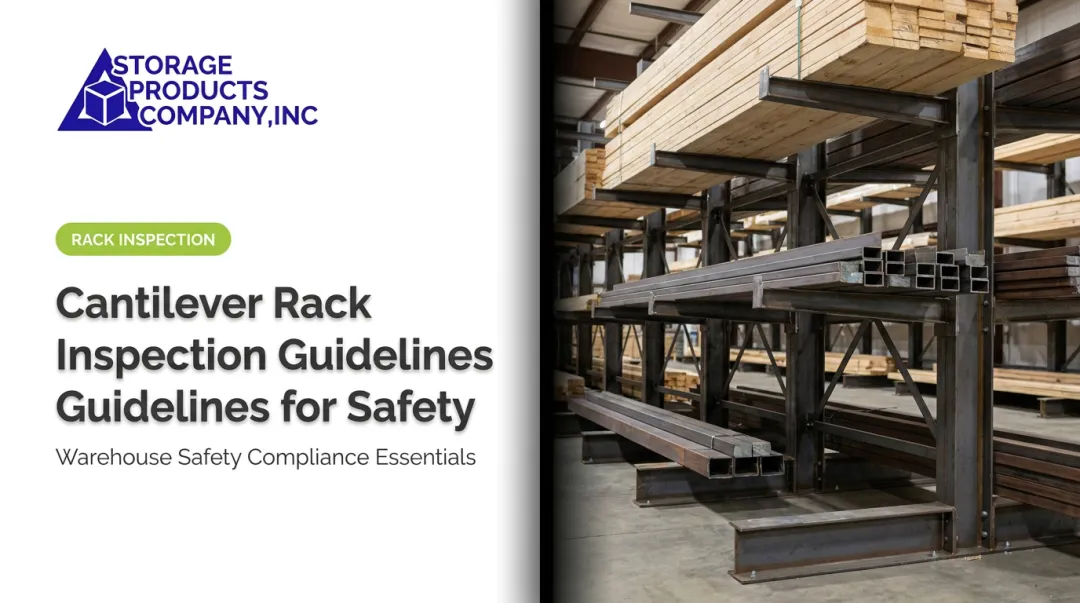
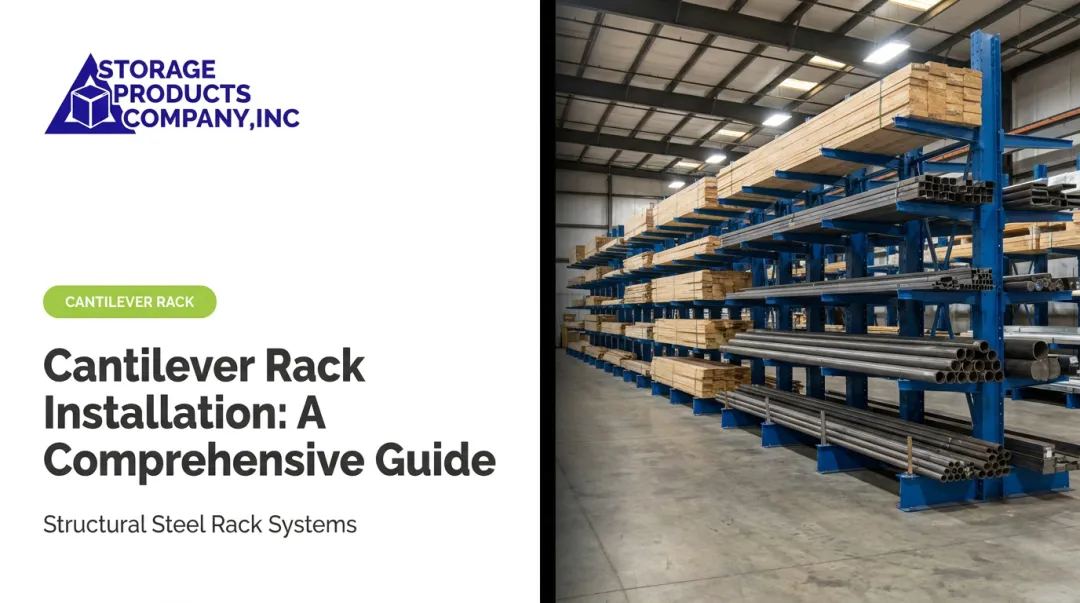
Cantilever racking is a storage system built specifically for long, bulky, or irregularly shaped materials that can't be palletized. Unlike conventional pallet racking — which uses front and rear uprights to support load beams — cantilever systems use rear-mounted vertical columns with arms that extend outward, leaving the entire load face completely open and unobstructed. No vertical columns interrupt the aisle, so there's nothing to limit what you can store or how long it can be.
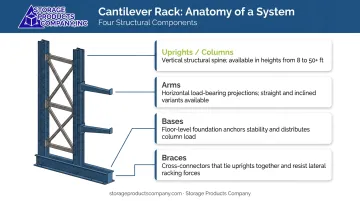
Four structural elements work together to make that open-face design possible.
Key Components
- Uprights (columns) — The vertical backbone. Heights range from 8 ft to 50+ ft depending on manufacturer and application
- Arms — Horizontal load-bearing extensions projecting from the column. Available in straight or inclined styles, typically 24 in to 72+ in long
- Bases — Floor-bolted foundations that counterbalance the cantilevered load; base length should equal or exceed arm length for proper stability
- Braces — Cross-connectors between uprights that resist lateral sway and column buckling, especially critical in taller systems and seismic zones
Single-Sided vs. Double-Sided Configurations
- Single-sided — Arms on one side of the column only; designed for placement against a wall or building perimeter
- Double-sided — Arms on both sides of the column; used for freestanding aisle installations where both faces are accessible
Storage Products Company supplies both configurations through manufacturer partners including Frazier Industrial and UNARCO Material Handling, covering light, medium, and heavy-duty capacity requirements.
Advantages of Cantilever Racking
Built for Long and Irregular Loads
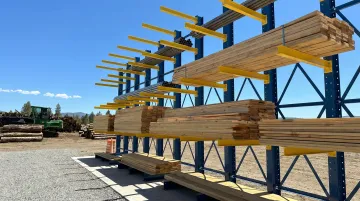
The open-front design makes cantilever racks the only practical racking solution for materials that simply don't fit a pallet footprint. Nucor Warehouse Systems calls cantilever the "Industry Standard for the Storage of Long Bulky Items" — and the application list backs that up:
- Lumber, plywood, OSB, and sheet goods
- Steel pipe, PVC pipe, copper tubing, and electrical conduit
- Bar stock, structural steel, and metal sheets
- Rolled carpet and flooring materials
- Furniture including sofas, mattresses, case goods, and panels
- Extruded aluminum, metal trim, ladder stock, and fencing
Werner Electric Supply provides a real-world example: a 35-ft tall cantilever system with 25 arm levels storing conduit and strut — a configuration that would be physically impossible on standard pallet racking.
That vertical reach matters more than it might seem.
Vertical Space Utilization
Floor-stacking long goods ties up floor space that operations need. Cantilever systems move storage vertical, stacking materials at multiple height levels and reclaiming that floor area for active use. In one documented case, Interlake Mecalux reports a mobile cantilever installation increased storage capacity by 48% while maintaining direct product access — without expanding the building footprint.
Faster Loading and Unloading
Because there are no front columns, forklifts and workers can approach stored material along its full length without maneuvering around obstructions or navigating restricted approach angles. As Steel King states in their product documentation: "With no front column in the way, cantilever racks are faster to load and unload, lowering handling time and costs."
That handling efficiency compounds quickly in high-throughput operations — lumber yards and steel service centers often cite load/unload speed as the primary driver for choosing cantilever over alternative storage methods.
Adjustability and Scalability
Arms adjust vertically along the column to match changing product heights, and the systems are available in arm lengths from 24 in to 72+ in to accommodate different load depths. As inventory evolves — different lumber dimensions, varied pipe lengths, a new furniture product line — the rack adapts without a full system replacement.
Outdoor Suitability
Cantilever racks are among the few warehouse storage systems genuinely suited for outdoor or semi-outdoor environments. Galvanized and powder-coated finishes resist corrosion and moisture, making them practical for lumber yards, steel service centers, and yard storage applications where standard painted steel would deteriorate. For operations across the Gulf Coast and Southeast — where humidity and weather exposure are constant factors — galvanized cantilever configurations are worth specifying from the start rather than retrofitting later.
Disadvantages of Cantilever Racking
Higher Upfront Cost
Heavy-gauge steel construction and specialized engineering make cantilever systems more expensive per unit than standard selective pallet racking. For facilities on tight capital budgets — particularly those where long goods represent only a fraction of total inventory — this cost difference is worth careful consideration before committing.
Used cantilever racking is one practical alternative. Storage Products Company maintains a used equipment program that includes cantilever rack, with all units inspected and condition-disclosed before resale. For budget-sensitive projects or short-term applications, this can meaningfully reduce initial outlay — without sacrificing the structural capacity the application demands.
Wider Aisle Requirements
Storing a 12-foot lumber bundle or a full-length pipe run requires aisle clearance proportional to the material — not just the forklift. This is a meaningful trade-off: wider aisles mean fewer rack rows in a given floor area, which reduces overall storage density compared to a tightly configured pallet rack layout.
Aisle width depends on the specific forklift type and the maximum load length in your inventory — there's no standard figure that applies across facilities.
Not Suitable for Palletized Inventory
Cantilever racks are purpose-built for non-palletized long goods. Storing standard palletized products on cantilever arms is awkward, inefficient, and a waste of the system's design strengths. Facilities with mixed inventory — both palletized SKUs and long goods — need both systems. Cantilever alone doesn't cover everything.
Load Distribution Requires Deliberate Planning
Capacity is arm-specific and column-rated, and the math matters. Steel King's documentation states that arm capacity equals load weight divided by the number of arms per level, assuming each arm supports an equal share.
As RMI notes, centering a 12-foot load across the arms isn't always straightforward — an off-center load can overload a single end arm, even when the total weight is within spec. That means load placement requires active attention, not just a capacity label on the column.
When to Use Cantilever Racking — and When to Skip It
Use It When Your Products Are Long, Irregular, or Non-Palletized
Cantilever racking delivers clear ROI in these industries and applications:
- Lumberyards and building material suppliers — dimensional lumber, sheet goods, composite panels
- Plumbing and electrical supply — steel pipe, PVC, copper tubing, conduit, strut
- Steel service centers — bar stock, structural steel, metal sheets and profiles
- Furniture distribution — sofas, mattresses, case goods, flat-pack panels
- Manufacturing — raw material storage where component lengths exceed pallet rack opening widths
- Carpet and flooring distribution — rolled goods of varying lengths
If these describe your inventory, cantilever racking is purpose-built for your load profile — not a workaround, but the appropriate system from the start.
Use It When Long Goods Are Eating Your Floor Space
If pipe is leaned against walls, lumber is stacked on the floor, or sheet metal is laid flat across aisles, that's a space problem cantilever racking is designed to fix. Moving those materials vertical frees floor space for operations, improves aisle safety, and often brings you into OSHA compliance at the same time.
Skip It When Most of Your Inventory Is Palletized
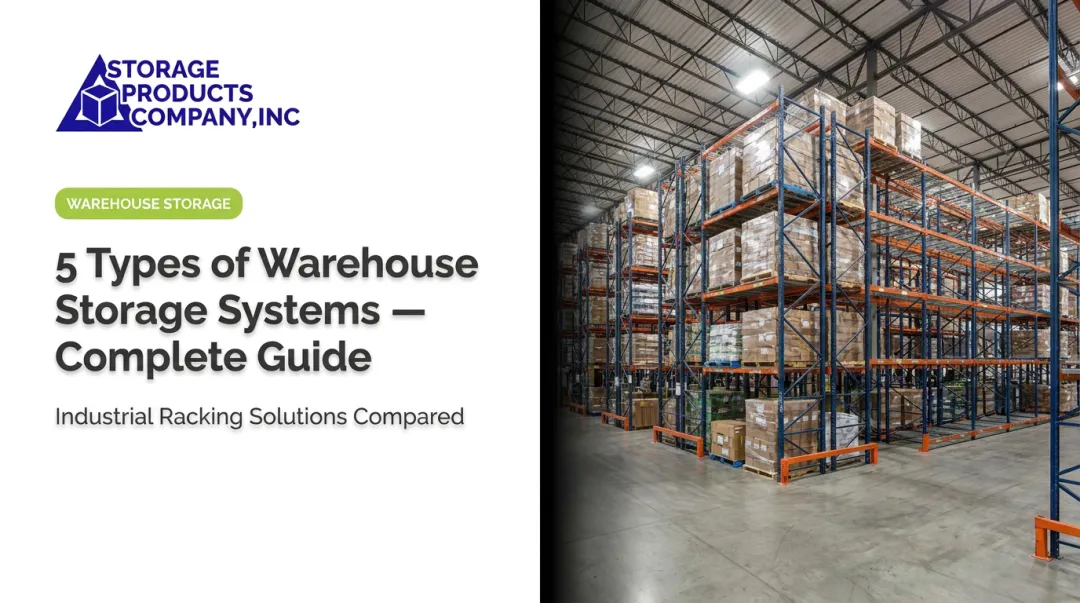
If the bulk of your stored goods fit on standard 48" x 40" pallets, selective pallet racking will almost always be more cost-effective and space-efficient. Cantilever systems aren't a default choice just because they're versatile — they're a specific solution for a specific load profile.
Ask Yourself These Questions Before Committing
- What is the longest item I regularly store? If it fits within a standard pallet rack bay opening, you may not need cantilever at all
- Can my current racking handle it safely? If long goods are currently on the floor or leaned against walls, the answer is no
- Do I have the aisle width to load it efficiently? Account for the longest load you'll handle — not just the forklift turning radius
- Is my budget better served by cantilever, or by pallet racking plus floor storage for occasional oversized items? If oversized loads are the exception rather than the rule, a hybrid approach may cost less overall
Answering these questions accurately requires knowing your exact product dimensions, aisle constraints, and throughput patterns — not estimates. Storage Products Company uses AutoCAD layout design to model cantilever configurations against a facility's actual floor plan, factoring in product dimensions, column placement, aisle clearance, and cube utilization before a single piece of equipment is ordered. The result is a system that fits your operation on day one, without costly field adjustments after installation.
Cantilever Racking vs. Pallet Racking: A Quick Comparison
| Factor | Cantilever Racking | Selective Pallet Racking |
|---|---|---|
| Load type | Long, bulky, non-palletized | Palletized SKUs |
| Front columns | None — open aisle face | Two front uprights per bay |
| Best applications | Lumber, pipe, bar stock, furniture, sheet goods | Boxed goods, palletized inventory |
| Aisle width | Wider (load-length dependent) | Narrower (forklift-dependent) |
| Upfront cost | Higher per unit | Lower per position |
| Outdoor use | Yes (galvanized/powder-coated options) | Limited |
| Adjustability | Arm heights adjustable on column | Beam heights adjustable on upright |
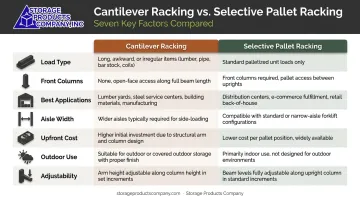
The key point: these aren't competing systems. They solve different problems. A building materials distributor might run cantilever sections for pipe, lumber, and structural steel — with selective pallet rack in adjacent areas for packaged fasteners and boxed goods. Storage Products Company designs these mixed-system warehouses as part of its layout, engineering, and installation services — putting each rack type where the load profile calls for it.
Frequently Asked Questions
What is the main purpose of a cantilever rack?
Cantilever racks are designed to store long, bulky, and irregularly shaped materials — such as lumber, pipe, bar stock, and sheet metal — that can't be efficiently handled by standard pallet racking. The open-front design, with no aisle-side columns, is what makes that possible.
What are the disadvantages of cantilever racking?
The main drawbacks are higher upfront cost compared to pallet racking, the need for wider aisles to accommodate long loads, and the fact that it's not suited for standard palletized inventory. It's a specialized system, not a general-purpose one.
Why choose cantilever racking for steel storage?
Steel sheets, bars, and structural profiles are long, heavy, and awkward to handle — exactly what cantilever systems are engineered for. The open-front design allows forklift access along the full load length, and heavy-duty arm ratings support the weight safely.
What is a heavy-duty racking system?
Heavy-duty racking refers to systems built with higher-gauge steel components rated for significantly greater loads than standard warehouse shelving. Cantilever racks typically fall into this category — heavy-duty arms from structural cantilever systems are commonly rated up to 8,000–9,000 lb per arm depending on depth and configuration.
How do I know if cantilever racking is right for my warehouse?
If you regularly store long, non-palletized, or oversized materials that currently end up on the floor or against walls, cantilever racking is the right fit. A storage solutions specialist — like the team at Storage Products Company — can assess your floor plan and inventory profile to confirm the best configuration.