
Introduction
A single-company warehouse stores one product family for one set of rules. A 3PL building rarely gets that luxury.
One floor might hold a retailer's full pallets, an e-commerce brand's loose items, and a parts distributor's long steel stock. Each client brings its own order profile and service-level agreement.
The shift toward shared space makes this harder. Armstrong & Associates reports that multi-client operations made up 54% of U.S. value-added warehousing and distribution space in 2022.
This guide covers the racking, shelving, mezzanine, and layout systems used to receive, store, pick, and stage inventory. It does not cover outsourced logistics services in general. We'll walk through the equipment options, a selection framework, layout design, and safety controls.
Key Takeaways
- Match equipment to load size, SKU count, velocity, and access needs.
- Weigh density against selectivity, pick speed, and forklift access.
- Design for the whole flow: receiving, reserve, forward pick, staging, returns.
- Plan client zones that can be reconfigured as contracts change.
- Inspect racks routinely and fix damage promptly.
What Storage Systems Do 3PL Warehouses Need?
What makes 3PL storage different?
A shared facility serves several customers at once. Each owns its inventory, has its own handling instructions, and ships on its own schedule. Contract volumes also change, sometimes mid-year.
That means a layout that maximizes pallet positions for one client may fail another. A client needing FIFO rotation, piece picking, or fast turnaround will not tolerate deep lanes that bury product.
Establish the inventory and workflow profile first
Before choosing equipment, document:
- Product form: full pallets, cases, cartons, totes, or single items
- Load dimensions, weight, and packaging stability
- SKU count, replenishment frequency, and dwell time
- Receiving patterns, shipping windows, and staging needs
- Returns, quarantine stock, and value-added work such as kitting or relabeling
- Expected growth
Service model matters too. Bulk replenishment, retail distribution, e-commerce fulfillment, cross-docking, and mixed B2B/B2C work each stress a building differently. Record which inventory needs dedicated locations, lot or serial tracking, expiration-date control, or restricted access before finalizing the layout.
Treat storage as part of the material flow
Racking connects to dock levelers, forklifts, conveyors, VRC lifts, packing areas, and the location controls in your warehouse management system. Capacity alone does not make a good design.
The layout must also support:
- Safe travel paths
- Efficient replenishment
- Accurate picking
- Predictable movement from dock to dock
Storage System Options for 3PL Warehouses and Distribution Centers
Pallet racking for multi-client pallet storage
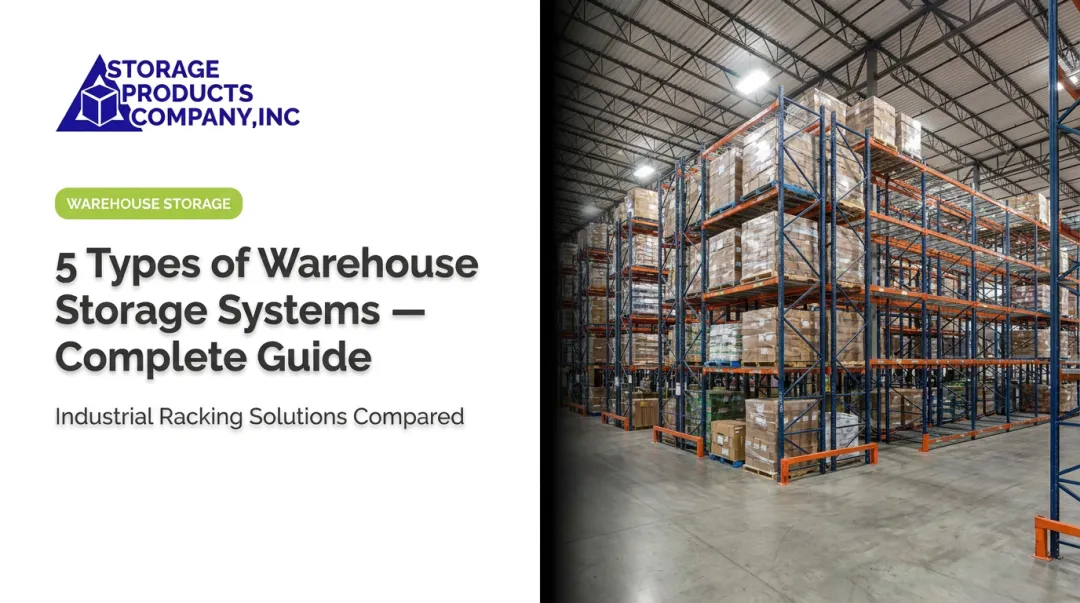
Selective rack gives direct access to every pallet. It suits high SKU variety and frequent access, at the cost of more floor space. Double-deep rack stores two pallets deep for more density, but the rear pallet loads first, so rotation is LIFO, as RMI's planning guide describes.
Selective rack's shelf or beam heights adjust on 2-inch centers in lighter-duty roll-formed applications, which helps when product mixes shift. Always verify capacities against the manufacturer's specifications.
Shelving, carton flow, and bin storage
For cases and eaches, hand-loaded options include steel shelving, bin shelving, and wire shelving. Carton flow rack uses pitched lanes so cartons or totes move to the pick face. It stores smaller items in about half the space of static shelving, according to manufacturer literature.
Both need clear replenishment rules and accurate location labels. Otherwise the travel savings disappear.
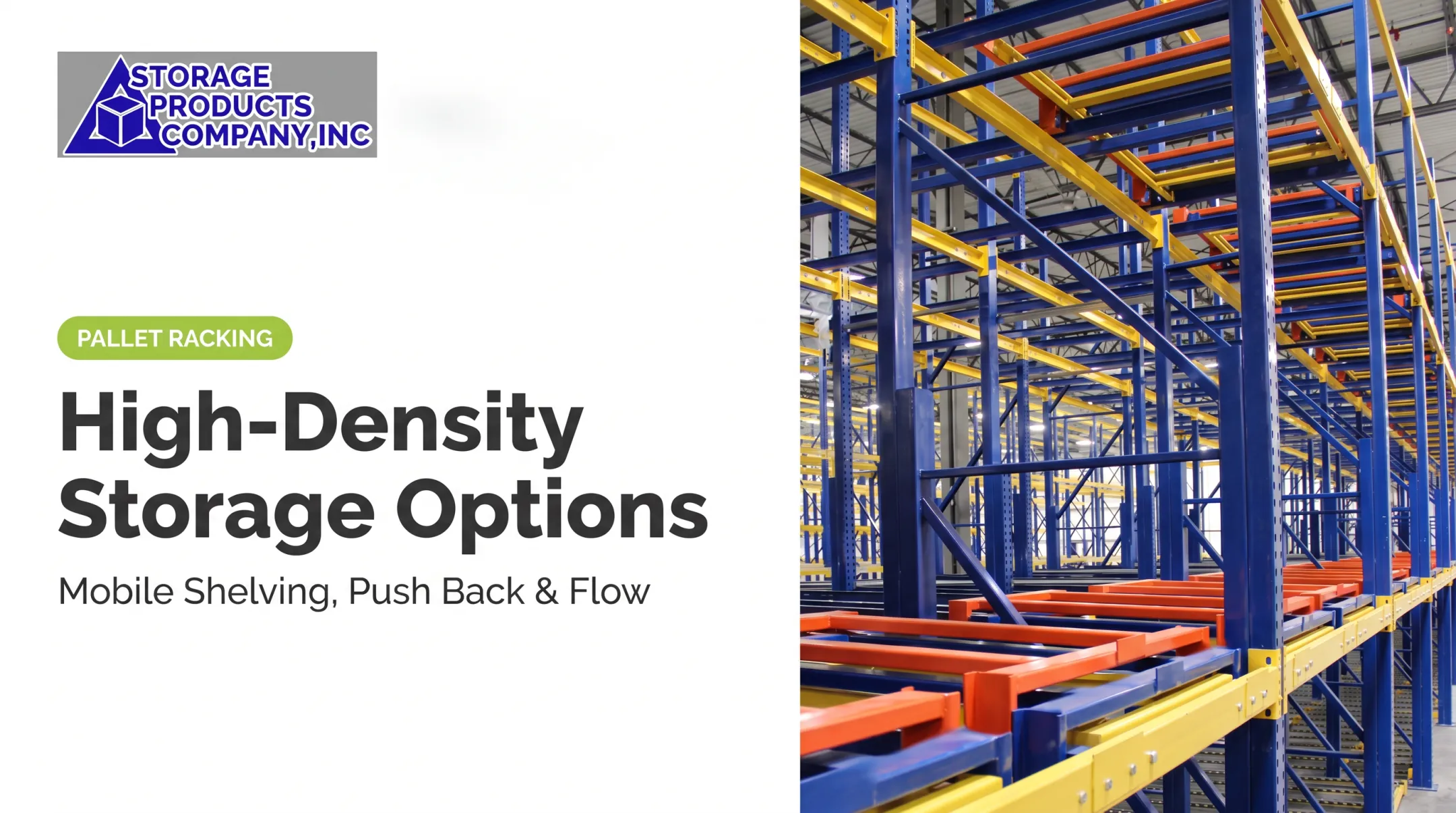
High-density systems for compatible inventory
| System | Rotation | Best fit |
|---|---|---|
| Drive-in | LIFO | Large quantities of one SKU |
| Drive-through | FIFO | Same-product lanes with two-sided access |
| Push-back | LIFO | Moderate depth, several SKUs per bay |
| Pallet flow | FIFO | High-volume, date-sensitive product |
Drive-in rack can store up to 75% more pallets than conventional selective rack, depending on lift equipment. The tradeoff is selectivity. Pick the rotation rule the client's product requires, then choose the system. Not the reverse.

Cantilever and specialized storage
Cantilever rack holds pipe, lumber, furniture, and other long or bulky goods that waste space in standard rack. Arm spacing, load support, and aisle access drive the design. Current cantilever design guidance sits in ANSI MH16.3-2025.
Mezzanines, pick modules, and automation-ready systems
Mezzanines add a second level for packing, quality control, or storage. Free-standing versions span up to 35 feet between columns. Pick modules combine pallet flow and case or each picking in one engineered structure. VRC lifts and conveyors move goods between levels.
Before adding any of these, review structure, sprinkler coverage, egress, fall protection, and maintenance. The 2024 IBC generally caps mezzanine area at one-third of the room, with limited exceptions. Confirm your local code edition.

How to Choose the Right Storage System for a 3PL Operation
Map inventory and handling requirements
Start with dimensions, pallet patterns, weights, SKU counts, order frequency, and turnover. Then group inventory into practical profiles:
- Full-pallet reserve
- Case-pick and each-pick
- Fast-moving and slow-moving
- Oversized or fragile
- Secure or regulated
Assign storage types only after the profiles exist.
Balance density, selectivity, and throughput
Dense systems restrict access. Selective systems consume floor area. The right answer depends on how often product must be reached.
Tie the choice to goals you can measure:
- Space utilization
- Pick travel
- Replenishment frequency
- Pick accuracy
- Damage rates
Slotting matters too. An MIT CTL study modeled slotting SKUs that are ordered together to reduce picker travel.
Plan for multiple clients and change
- Define client zones and decide which locations are dedicated or shared
- Label by account and set up quarantine and separate staging where needed
- Use adjustable beams, shelving, and mobile equipment for reconfiguration
- Support it with barcode or WMS location controls
Confirm building and compliance constraints
Check the building before you lock in a system:
- Clear height and column spacing
- Floor condition and capacity
- Sprinkler layout and dock configuration
- Aisle widths, lighting, and egress
Stored material must not create a hazard under OSHA 1910.176, and exit routes must stay clear under 1910.37. Rack design follows ANSI MH16.1. Get engineering review where required, and coordinate sprinklers with the actual storage configuration under NFPA 13.

Evaluate lifecycle value
Compare more than the sticker price. Factor in installation, protection, inspections, repairs, expansion options, and downtime risk.
Ask suppliers for scaled layouts, load calculations, timelines, installer qualifications, and examples of whole-warehouse coordination. Frazier, for example, backs its structural rack with a two-year pallet rack damage warranty.
How to Design a 3PL Warehouse Storage Layout
Map the flow first, then separate conflicting traffic wherever you can:
- Receiving and inspection
- Putaway, reserve, and forward pick
- Packing, staging, and shipping
- Returns and quarantine
Then build client zones around account-level identification, lot or serial control, replenishment, and value-added work. Leave room to add or remove storage as contracts change.
Test the plan in scaled AutoCAD drawings before anything is installed. Verify:
- Rack orientation
- Aisle and dock access
- Clearances and staging capacity
- Peak-season conditions and expansion room
Storage Products Company, based in Mobile, Alabama, uses AutoCAD to lay out equipment and supplies drawings, project management, and installation by factory-recommended, insured installers. Represented rack systems are designed to RMI specifications.
Safety, Maintenance, and Performance Controls
Safety basics
- Post load plaques showing maximum loads per level and bay
- Add guardrails and end-of-aisle protection
- Separate forklifts from pedestrians
- Place pallets squarely and train operators
- Keep emergency access clear
After any rack impact, act fast. OSHA advises isolating the area immediately after rack damage. It also documents a fatal rack collapse during loading.
Inspection and maintenance
RMI recommends inspecting at least annually, more often with heavy traffic. Its risk-based guidance suggests monthly checks for high-risk racks. These are recommendations, not OSHA mandates.
Preventive maintenance should cover damaged uprights and beams, anchors, shelving, lift equipment, signage, and lighting. Define who owns each item: the 3PL, client, landlord, or equipment provider.
Track performance
Monitor these metrics and use the trends to re-slot inventory or change equipment:
- Inventory accuracy and order accuracy
- Storage utilization and pick travel
- Replenishment activity and dock-to-stock time
- Product damage and safety incidents
Frequently Asked Questions
What is a 3PL distribution?
It is the outsourced storage, handling, fulfillment, and movement of goods for another business. The warehouse or distribution center is the physical site where that work happens.
What storage systems are commonly used in 3PL warehouses?
Selective and high-density pallet rack, shelving, carton flow, bins, cantilever rack, floor storage, and mezzanines. The mix depends on inventory and workflow.
How do I choose between selective and high-density rack?
Selective rack favors direct access and SKU variety. High-density rack favors capacity for compatible loads. Weigh turnover, rotation rules, and forklift access.
How can a 3PL store multiple clients' inventory safely?
Use physical or system-based segregation, clear labels, account-specific locations, barcode or WMS controls, dedicated staging, restricted access, and documented handling procedures.
Can a 3PL storage system expand as the operation grows?
Yes. Modular rack, adjustable components, and planned expansion zones help. Consider clear height, floor capacity, and workflow early.
What should a storage system quote include?
Site measurements, equipment specs, load capacities, layout drawings, safety components, installation, project management, delivery timing, warranty, maintenance, and expansion options.