
Introduction
Pallet racking is engineered to carry heavy loads, day after day. When it fails, the cause is rarely one dramatic event. More often it's a mix of damage nobody reported, overloaded bays, shaky installation, layout changes, and inspections that slipped.
The stakes are real. OSHA's Smithfield Foods record describes a December 2020 collapse after a turret truck struck an upright. One employee died and another was hospitalized.
This article covers the main causes, the warning signs, prevention steps, and long-term controls that protect people, inventory, and delivery commitments.
Key Takeaways
- Most rack collapses are preventable and build from several small problems.
- Overloads, forklift impacts, poor anchoring, unapproved changes, and damaged parts are the major risks.
- Visible capacity plaques, trained operators, rack guarding, and fast impact reporting cut exposure.
- Any relocation, layout change, or new product profile should trigger a design review.
Common Causes of Warehouse Racking Collapse
A rack collapse is the partial or complete failure of the rack structure or its components. A single pallet falling from a beam is a different problem.
Collapse can also be progressive. One failed upright, beam, connector, or anchor shifts force to neighboring bays, and a larger section follows. One engineering study modeled this domino effect in a loaded rack after a single leg was removed by impact. The study models that mechanism; it does not report field incident rates.
Excessive or Unstable Loads
The Rack Manufacturers Institute (RMI) identifies overloading as a source of beam deflection and possible column buckling. Risk rises when crews:
- Exceed the rated capacity on the load plaque
- Store unstable, damaged, or overhanging pallets
- Ignore the pallet weight and dimensions the bay was designed around
OSHA also requires tiered materials to be stacked, blocked, or interlocked so they stay secure against sliding or collapse. Plaques, pallet specs, and product weights have to be read together, not separately.
Forklift Impacts and Accumulated Damage
Forklift, reach-truck, and pallet-jack strikes are a common cause of rack damage. Impacts can bend uprights, loosen connections, and damage base plates. Exposed aisle-facing uprights are the most vulnerable.
The dangerous ones are the "minor" hits nobody reports. A scuffed upright still carries load, but with less margin each time.
Installation, Anchoring, and Component Problems
Look for these issues:
- Misaligned frames and missing beam locks
- Loose connections or inadequate anchoring
- Floors that don't suit the anchors
- Mixed components from different manufacturers
- Straightened or improvised repairs
RMI notes that components are tested as a system and reports incompatible mixing as a cause of collapses. Installation should follow the system design and manufacturer instructions.
Layout, Environmental, and Operational Changes
Relocating racks, moving beam levels, narrowing aisles, switching lift equipment, or storing different products can invalidate the original design assumptions. A rack built for light cartons isn't automatically safe for heavy pallets.
Site conditions matter too. RMI notes that slab and soil conditions affect anchor and baseplate design, and seismic requirements vary by location. Damaged concrete, standing water, and poor housekeeping are worth fixing before they become structural problems.

What Happens If Warehouse Racking Collapse Is Ignored
Consequences stack up fast:
- Worker injury or death
- Falling inventory and product loss
- Damaged forklifts and facilities
- Blocked aisles and lost storage capacity
- Shipment delays, emergency cleanup, and repair costs
- Reputational harm
The regulatory side is real as well. OSHA records describe citations for unanchored pallet racks and unrepaired damaged columns and bracing, with struck-by exposure for workers.
For sector context, the Bureau of Labor Statistics recorded 32 fatal injuries in warehousing and storage in 2024. That's an industry-wide figure, not a rack-collapse count, and rack-specific fatalities are not broken out in the published total.
Reinhart Food Service's 2016 incident shows how it plays out: a worker was struck by falling cases and died when a rack collapsed.
Those outcomes often start with damage that went unreported. The signs below are what to catch first.
Warning Signs That Precede Warehouse Racking Collapse
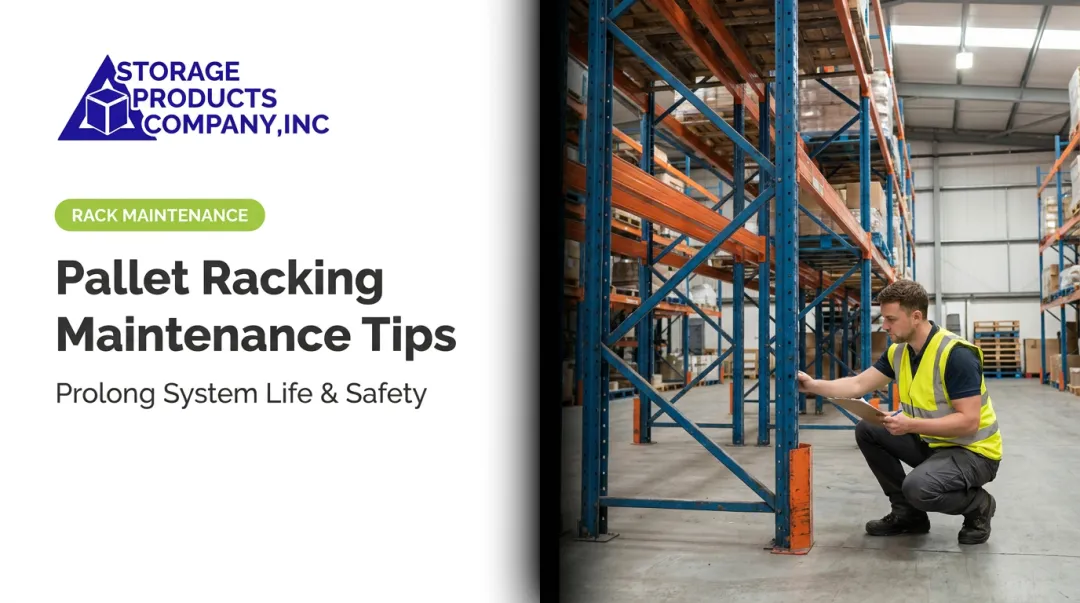
Treat these as conditions to report and evaluate immediately. Employees shouldn't try to repair or investigate a rack that remains loaded or accessible.
Bent, Twisted, or Leaning Uprights
Watch for dents, buckling, corrosion, or a frame that no longer looks plumb. RMI cites a straightness tolerance of 0.5 inch per 10 feet of height, and an out-of-tolerance rack needs correction. Restrict access and follow your damage-response procedure.
Damaged, Missing, or Loose Connections and Anchors
Look for missing beam locks, displaced beams, lifted base plates, damaged anchors, bent bracing, and cracked welds. RMI says connection-point damage, including broken welds or missing hardware, is typically more critical than a dent. These defects affect the load path and need assessment by a qualified rack professional or engineer.
Sagging Beams, Displaced Loads, and Unusual Movement
Red flags include deflected beams, leaning or sliding pallets, product falling from positions, and movement during loading. RMI's L/180 deflection figure is a serviceability criterion, not proof a beam is structurally safe.
Isolate the bay, unload only when safe, document it, and return it to service only after assessment or repair.

How to Prevent Warehouse Racking Collapse
Prevention is a system: design verification, correct installation, safe loading, operator behavior, physical protection, inspections, and documented corrective action. No single guard or annual review covers it.
Verify Layout, Load Requirements, and Anchoring Before Installation
A good layout accounts for:
- Rack type, bay dimensions, and beam elevations
- Pallet sizes and product weights
- Aisle widths and lift-truck turning paths
- Floor conditions and sprinkler or building clearances
- Expected operating changes
Anchoring depends on the rack design, site conditions, manufacturer instructions, and applicable requirements. Get site-specific professional guidance rather than assuming one rule fits.
Storage Products Company provides AutoCAD layout drawings and storage rack installation through factory-recommended, insured installers. The rack systems it represents are designed to RMI ANSI MH16.1 specifications.
Use Qualified Installation and Formal Change Control
Before handover, verify:
- Frame alignment and beam connections
- Bracing, base plates, and anchors
- Row spacers, safety accessories, and load plaques
Then require a documented review whenever racks are relocated, components are replaced, beam levels change, equipment changes, or different products arrive. RMI relocation guidance calls for auditing components and checking new-site seismic requirements before a move.
Control Loads and Pallet Handling
- Post capacity information where operators can see it
- Take capacity data from the system design or manufacturer, never an informal estimate
- Train every shift on load limits
- Check pallet condition and dimensions
- Distribute loads as designed and prevent overhang
- Keep unstable loads out of unsuitable bays
RMI's summary of ANSI MH16.1 calls for plaques of at least 50 square inches showing rated load, with a plaque for each configuration where they differ.
Reduce Forklift Impacts Through Training, Traffic Control, and Protection
OSHA requires powered industrial truck operators to complete formal instruction, practical training, and performance evaluation, with refresher training after an accident or near miss.
Pair that with:
- Controlled speeds and clear turning paths
- Clear aisles and pedestrian separation
- Floor markings
- Rack-end protection, upright guards, and barriers
The Smithfield report noted no end-of-aisle impact protection at the affected rack. Still, guards reduce exposure; they don't make a damaged rack safe.
Inspect, Report, Isolate, and Repair Damage Promptly
- Report every impact or visible defect.
- Block unauthorized access.
- Unload or stabilize only under a safe procedure.
- Photograph and document the condition.
- Get an assessment from a qualified professional.
- Use compatible, approved replacement parts.
- Keep the rack out of service until the fix is verified.
RMI says to isolate a severely damaged rack immediately, and that straightening should be considered only if the supervising engineer approves.

Tips for Long-Term Prevention and Control
Keep a Written Inspection Program
Include routine visual checks, documented reviews, post-impact inspections, and extra reviews after layout, load, equipment, or environmental changes.
There is no universal inspection interval. RMI notes that standards do not set a fixed frequency, and best practice ranges from monthly to annually. It advises inspecting at least annually, and more often in high-throughput or high-traffic areas. Confirm intervals against manufacturer instructions and your risk profile.
Storage Products Company's equipment inspections include site visits, rack condition reports, and flagging of racks that present safety concerns.
Keep Training Current
Train teams on:
- Load limits and correct pallet placement
- Forklift and pedestrian routes
- Damage reporting and escalation paths
Give refresher instruction when people are new to the role or reassigned.
Build Reliable Records and Tools
Retain:
- Current layout drawings and capacity information
- Installation records and component specifications
- Inspection findings and repair approvals
- Training records and incident reports
Consider barcode inspection tools, rack ID labels, photo documentation, or impact sensors. Vendors such as A-SAFE describe sensors that flag which rack was hit. Technology can support competent inspections, but it does not replace them.
Pair those records with preventative maintenance based on factory-recommended procedures to keep the system in working order.
Conclusion
Rack collapse has identifiable causes: overloads, impacts, installation errors, unsuitable changes, and neglected damage. Each one can be controlled.
Sound design, correct installation, disciplined loading, trained operators, physical protection, and routine inspections make prevention achievable. Prompt reporting and corrective action protect people, preserve inventory, and limit avoidable cost and downtime.
Frequently Asked Questions
What does pallet racking mean?
Pallet racking is a steel storage system of vertical frames and horizontal beams that holds palletized goods. Safe capacity depends on the specific design and configuration.
What are the safety guidelines for pallet racking?
Follow manufacturer load limits, post capacity plaques, anchor and install per design, train operators, keep aisles clear, guard rack ends, inspect routinely, and report damage immediately. Verify current OSHA, ANSI/RMI, building-code, and local requirements.
Does pallet racking need to be bolted down?
Anchoring is commonly part of a proper installation, but requirements depend on the system, floor, site, and manufacturer instructions. Get a site-specific determination rather than assuming unanchored racks are safe.
How often should warehouse pallet racking be inspected?
Employees should do routine visual checks, with documented internal reviews and periodic qualified professional inspections. RMI advises at least annually, and extra inspection after any impact, relocation, modification, or unusual loading.
What should you do if pallet racking is damaged?
Report it, restrict access, follow your safe unloading procedure, document the condition, and get a qualified assessment before repair or reuse. Never straighten, weld, or substitute parts without approval.
Can a forklift impact cause a warehouse rack collapse?
Yes. An impact can damage uprights, beams, connectors, anchors, or coatings and contribute to progressive failure, even when damage looks minor. Report and evaluate any significant contact right away.