
The catch is access. Every aisle you remove is a path you can no longer walk or drive. Distribution centers, retail stores, manufacturing plants, and automotive parts distributors all balance space, access, inventory control, safety, and operating cost.
This guide compares three options: mobile shelving for hand-picked items, push-back racking for LIFO pallet storage, and pallet flow racking for FIFO pallet movement.
Key Takeaways
- High-density storage adds capacity by removing aisles, but it limits direct access.
- Mobile shelving suits hand-picked, high-SKU items; push-back and pallet flow suit pallets.
- Push-back is LIFO from one aisle; pallet flow is FIFO from separate sides.
- Match the system to loads, SKU count, rotation, equipment, safety, budget, and growth.
What Is High-Density Storage and Why Is It Important?
What is high-density storage?
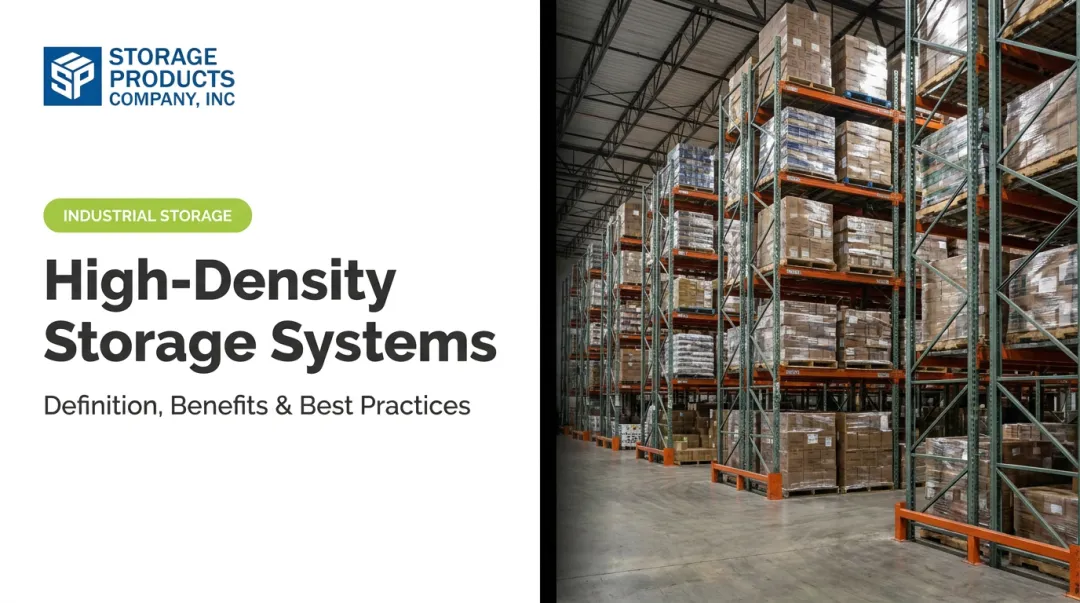
High-density storage holds more product in a fixed footprint. It does this by reducing aisle requirements, storing items deeper or more compactly, and using available height.
It is a design goal, not one product. The right system depends on whether you store small parts, cartons, cases, or pallets.
Why does high-density storage matter?
Better space use can delay a facility expansion. The market makes that appealing: Cushman & Wakefield reported national industrial vacancy of 6.8% and annual asking-rent growth of 4%. Those are industrial-market figures, not warehouse-only numbers, but they show why extra square footage is costly.
The core trade-off is density versus selectivity versus throughput:
- Selective racking gives direct access to every pallet but uses more floor area for aisles.
- Dense systems store more but may restrict access or force a rotation method.
- Many facilities use several systems in different zones, with selective rack for fast movers and dense lanes for bulk.

High-Density Storage Options
No option is universally best. Compare them on access, density, rotation, handling method, and fit.
| System | Handling | Rotation | Typical fit |
|---|---|---|---|
| Mobile shelving | Hand access | Not lane-based | Parts, files, small items |
| Push-back rack | Forklift, one aisle | LIFO | Multiple pallets per SKU |
| Pallet flow rack | Forklift, two sides | FIFO | Date-controlled, fast movers |
Mobile shelving
Mobile shelving mounts shelves on movable carriages that compact rows together and open an aisle only where needed. It is built for hand access to cartons, bins, parts, and records, not deep pallet lanes. Storage Products Company offers it as lateral movable units, which eliminate aisles for maximum density.
Best fits include high SKU variety, limited floor space, and parts storage. Spacesaver reports that Dave Kehl Chevrolet stores three times as many parts in the same space with its system. That density gain comes from a manufacturer case study, so confirm it against your own SKU mix and floor load.
Trade-offs:
- Strong floor-space use and configurable access
- Poor fit for heavy pallet loads
- Access is limited, so it suits slower requirements or record storage
- Floor loading must be checked, and anti-tip, brake, and locking features matter
Push-back racking
Pallets rest on nested carts on inclined rails. Loading a new pallet pushes stored pallets back; removing the front pallet lets the next one roll forward. Loading and retrieval happen in the same aisle, so access is LIFO.
Unlike drive-in rack, forklifts stay in the aisle instead of entering the lane. It works well for several pallets per SKU, moderate SKU variety, and operations where LIFO is acceptable. Individual levels can hold different SKUs, so products can be mixed within a bay.
Trade-offs:
- More pallets per square foot and many lanes served from one aisle
- No direct access to pallets behind the front position
- Pallet condition and dimensions must be compatible
- Poor fit for strict FIFO
Depth varies by design. UNARCO describes 2 to 6 pallets deep, and RMI says its rule of thumb is that push-back works best when you hold at least five times as many pallets of a SKU as the lane depth. Use those figures as planning guidance rather than a fixed standard.

Pallet flow racking
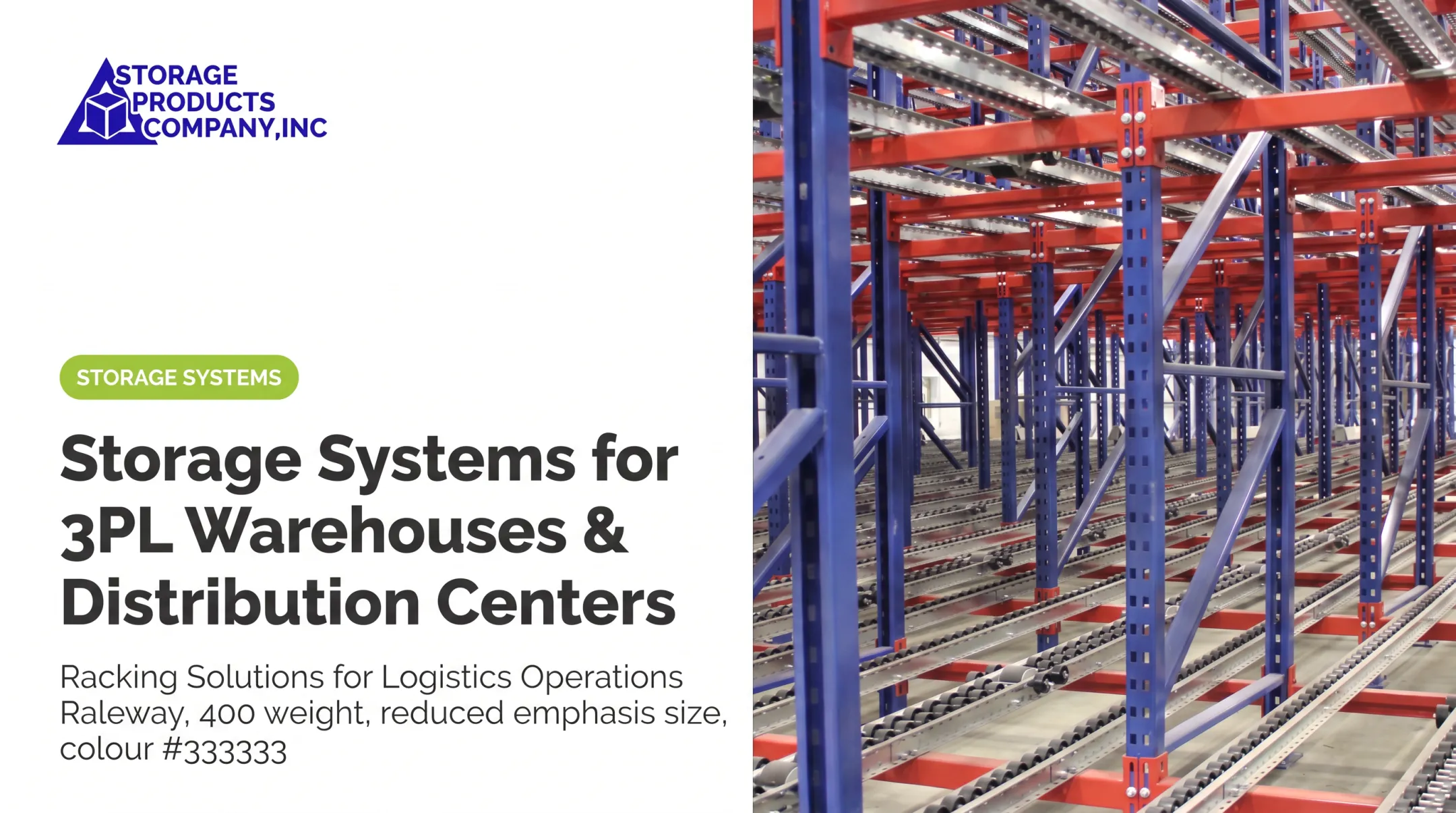
Pallet flow uses inclined roller lanes. Pallets load on the high side and travel by gravity to a separate retrieval face, so the first pallet in is the first out. Storage Products Company configures these systems for true FIFO, with a charge-side and discharge aisle and lanes that stay full while product remains available.
Best fits are perishable or date-controlled goods, fast movers, and predictable inbound-to-outbound flow.
Trade-offs:
- Reliable FIFO and organized loading and picking sides
- Less forklift travel into lanes
- More design complexity
- Strict pallet compatibility: one manufacturer's manual requires undamaged, dry pallets of a specified style and weight
- Less flexible when SKU quantities change often
How to Choose the Right High-Density Storage Option
Choose based on your inventory and workflow, not the highest stated density or lowest purchase price.
What products and loads must be stored?
Start by documenting what you hold: parts, cartons, cases, or pallets. For pallets, record dimensions, weights, pallet type, overhang, and stability concerns, plus ceiling height and seismic needs per RMI's specification guidance.
Hand-picked, high-SKU inventory points to shelving. Repeated pallet quantities point to push-back or flow.
How much access and what rotation are required?
Decide whether workers need every item, every SKU, or only the front pallet in each lane. Then match rotation:
- Strict date or shelf-life control: pallet flow
- Interchangeable product where LIFO is fine: push-back
- Piece or case picking: mobile shelving or carton-level storage
What are the space, equipment, and throughput constraints?
Review clear height, columns, floor condition, dock locations, fire-protection clearances, and forklift turning needs. Then compare inbound and outbound volume, peak demand, and replenishment frequency. Density should never create a bottleneck at the pick face.

What are the total costs and future needs?
Count the full lifecycle:
- Equipment and installation
- Layout changes, inspections, and repairs
- Training and the cost of slower access
Plan for SKU mix changes and seasonal swings. A blend of mobile shelving, push-back, flow, and selective storage often holds up best.
Storage Products Company supports this stage with application review and AutoCAD drawings that clarify space requirements and compare layouts before installation.
What to Check Before Finalizing a Storage System
- Engineering: Confirm load ratings, pallet dimensions, depth, height, floor conditions, and clearances. ANSI MH16.1-2023 covers movable-shelf, push-back, and pallet-flow racks. Verify the adopted IBC, IFC, and NFPA 13 editions with your local authority, plus OSHA 29 CFR 1910.176 on clearances and stable storage.
- Safety features: Specify rack protection, pallet stops or guides, mobile-shelving anti-tip and interlocks, clear load signs, inspections, and operator training. RMI recommends annual rack inspections and another after any impact or seismic event.
- Real-world testing: Test travel paths, damaged-pallet scenarios, maintenance and emergency access, and future inventory changes.
- Documentation: Require a layout, load calculations, installation plan, and handover process your team can review before operations begin.

Conclusion
Each system solves a different problem:
- Mobile shelving: compact hand-access storage
- Push-back rack: dense LIFO pallet storage
- Flow systems: FIFO pallet movement
The best result balances capacity with access, rotation, safety, throughput, total cost, and flexibility. A proper layout and professional installation lock those gains in.
Frequently Asked Questions
What is a high density storage system?
It stores more inventory in a fixed footprint by reducing aisle space, increasing depth, or using height. Access and throughput must be weighed against the added capacity.
What are the different types of racking systems?
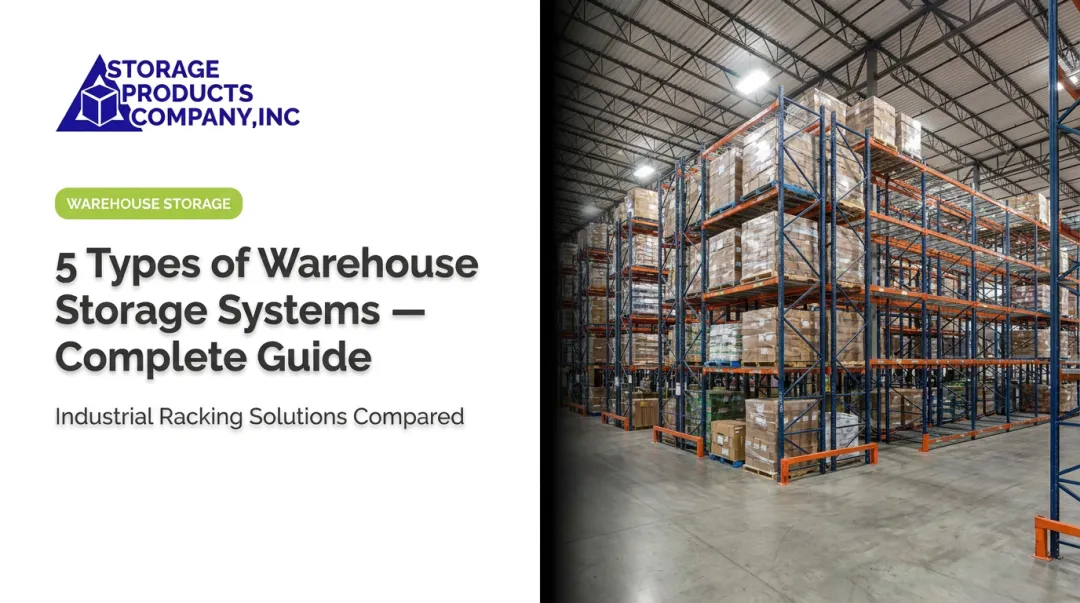
Common types include selective, drive-in, push-back, pallet flow, double-deep, mobile pallet racking, and automated shuttle systems. This article focuses on mobile shelving, push-back, and pallet flow.
How much does heavy-duty racking cost?
Cost depends on dimensions, load ratings, depth, accessories, installation, floor conditions, and project complexity. Get a layout-based quote rather than relying on a generic price.
How should a pallet sit on racking?
It must be fully supported, correctly positioned, stable, and within posted load and clearance limits. Follow the system design and manufacturer guidance.
What does "high rack safety" mean?
It covers engineered load capacity, stable pallet placement, impact protection, clearances, inspections, training, and compliance with workplace and building requirements.
How high is warehouse racking?
Height depends on building clear height, loads, handling equipment, sprinkler and structural clearances, seismic conditions, and codes. A professional layout and engineering review should set it.