
Pick wrong and the costs show up fast: wasted floor space, slow picking, forklift congestion, and safety exposure. Expansion gets harder too. Many operations buy on price or density alone, then discover the system doesn't match how product actually moves.
This guide compares the two on load type, access, capacity, flexibility, and cost. It also covers when a combined layout beats either system on its own.
Key Takeaways
- Shelving suits hand-loaded cartons, bins, and parts; pallet racking suits palletized, forklift-handled loads.
- Racking uses height well but needs aisle planning and protection.
- Always compare published load ratings, not categories.
- Many facilities do best with racking for reserve and shelving for forward picking.
Industrial Shelving vs Pallet Racking: Quick Comparison
| Factor | Industrial shelving | Pallet racking |
|---|---|---|
| Load type | Cartons, totes, bins, tools, components | Palletized goods |
| Loading | By hand | Forklift or other equipment |
| Access | Direct to individual items | Pallet positions |
| Best workflow | Piece-picking, parts, order assembly | Reserve storage, bulk replenishment, full-pallet orders |
| Flexibility | Adjustable shelf levels | Adjustable beams; several configurations |
Load type, access, and picking speed
RMI describes shelving as typically freestanding and hand-loaded, while rack is often loaded mechanically. It also notes that pallet rack loads can run 1,000 lb or more, and shelf loads are usually under 1,000 lb. Those are general descriptions, not limits. Capacity depends on the specific product.
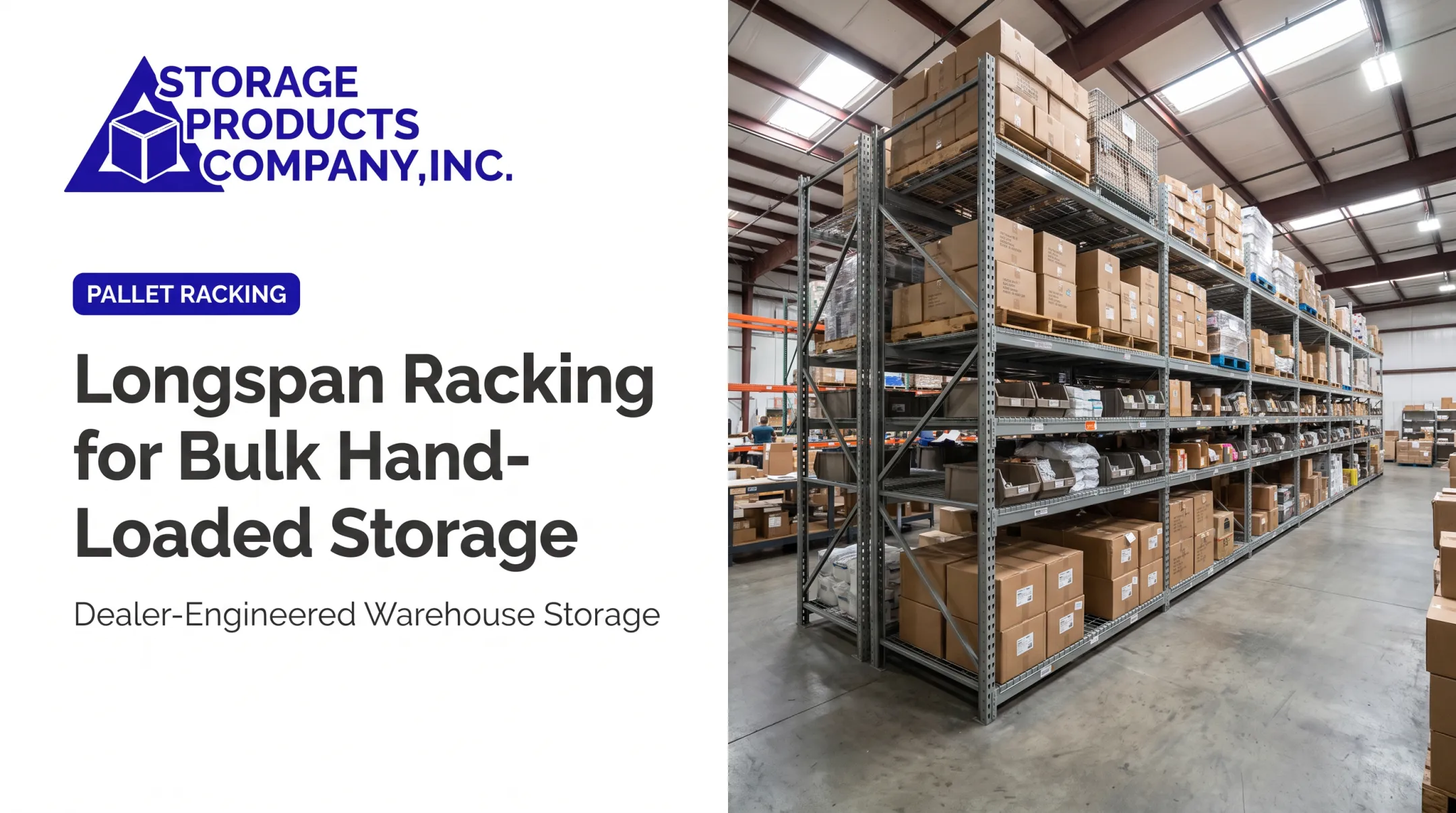
Open shelving puts every item in reach, which suits piece-picking and parts distribution. Wire shelving, for example, gives quick identification and easy access in automotive parts storage. Pallet racking suits full-pallet orders and bulk replenishment.
Space and capacity
Shelving capacity depends on shelf depth, height, and the aisle width people need to reach product. High-rise steel shelving above 20 feet uses vertical space but requires mechanical picking equipment.
Pallet racking stacks pallets on multiple beam levels, which raises storage per square foot. Aisles and forklift clearances still eat floor space, so density has limits.
Flexibility and configurations
Shelving levels adjust to changing SKU sizes. Selective rack adjusts on 2-inch vertical centers, giving the most selectivity for any SKU. Other pallet rack configurations trade access for density:
- Drive-in: Multiple pallets deep, entered and retrieved from the same side. A Steel King cold-storage guide reports up to 75% more pallets than selective in its cited application.
- Drive-through: Loads enter one side and exit the other, supporting FIFO, though the exit aisle takes space.
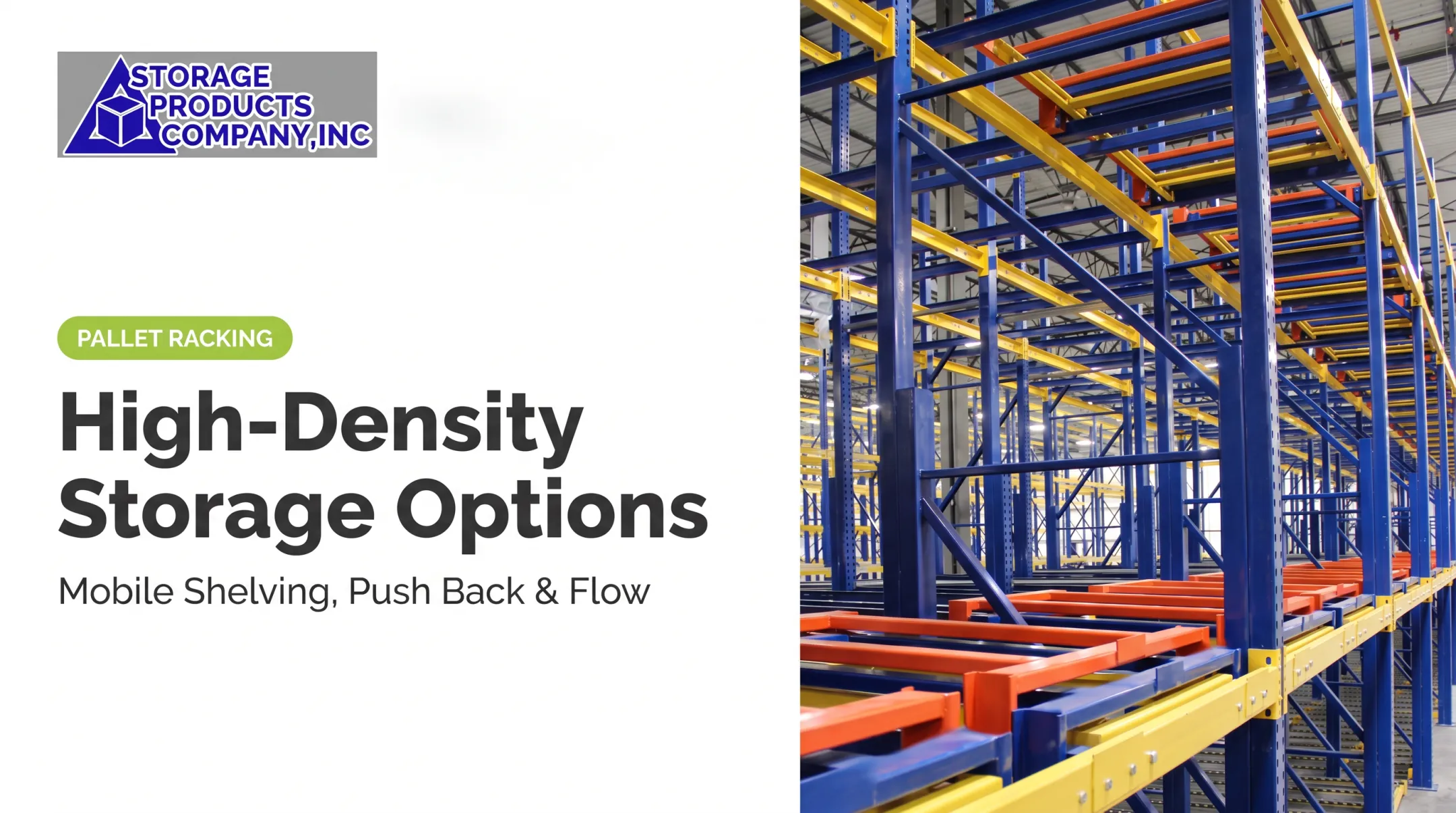
- Push-back: Lane storage, LIFO, no direct access to every pallet.
- Double-deep: Two positions deep, which reduces aisles.
- Pallet-flow: Gravity roller lanes with FIFO and high throughput.

Cost and implementation
Published prices vary widely by region, configuration, and installation scope. For example, Uline lists a 48 x 12 x 87 in. steel shelving unit with six shelves rated at 550 lb each at $315, and a pallet-rack starter unit at $495. These are single products, not installed systems.
Shelving costs include units, assembly, floor loading, and future expansion.
Racking adds several layers beyond frames and beams:
- Load ratings and engineering
- Anchorage and rack protection
- Layout design and forklift compatibility
- Ongoing inspections
Local rules matter. Sacramento's guideline, for instance, requires anchorage for racks between 5 ft 9 in. and 8 ft, and full engineering from 8 to 12 ft. Check your own jurisdiction.

What Are Industrial Shelving and Pallet Racking?
Industrial shelving
Industrial shelving is a freestanding system with adjustable horizontal shelves for hand-loaded inventory. It serves warehouses, manufacturing plants, retail back rooms, distribution centers, and automotive parts operations.
Benefits include:
- Direct access to individual SKUs speeds piece-picking and improves order accuracy
- Adjustable shelves adapt to changing item sizes
- Lower dependence on forklifts for day-to-day picks
Common variations include:
- Steel shelving
- Wire shelving, which offers visibility and air circulation
- Rivet or boltless shelving, an economical choice for lightweight, hand-stack needs
- Bin or parts shelving
- Heavier-duty and high-rise versions
Capacity is model-specific. One wire shelving maker rates its product at 800 lb per shelf, while a steel unit may carry 550 lb. Always check the spec for the product you're buying and how it's installed.
Where shelving fits
Typical uses include:
- Small parts and maintenance supplies
- Component staging
- E-commerce or retail order picking
- Forward-pick areas near production or shipping
Adding drawers to standard shelving can hold 5 to 8 times more SKUs in the same footprint, with faster picking. Carton flow racks are another option for smaller items.
Pallet racking
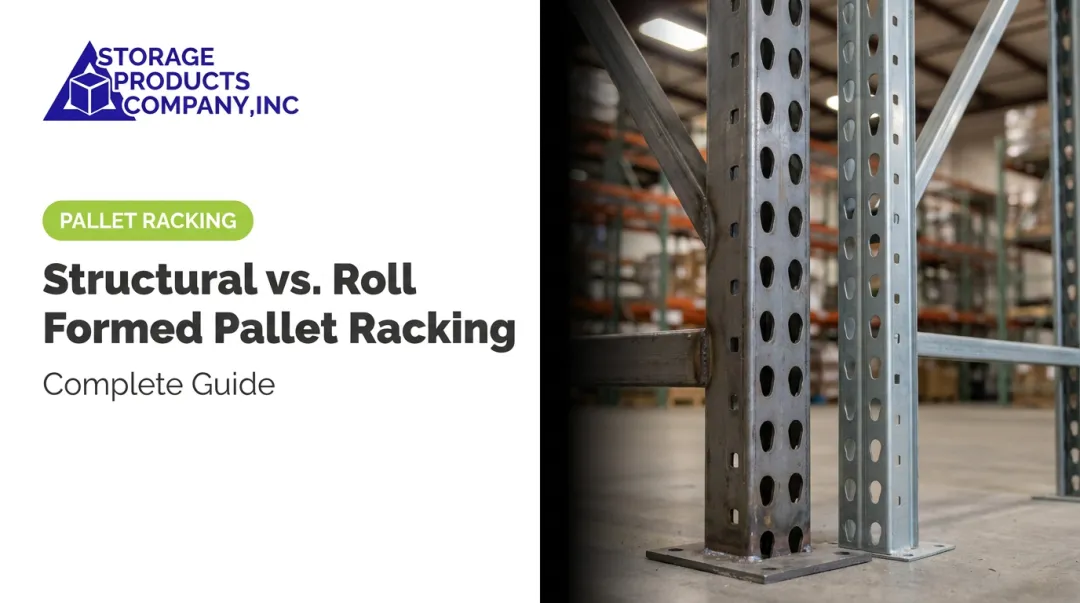
Pallet racking is a framework of uprights and beams, with optional decking, that holds palletized loads at multiple levels. MHI describes it as storage for cartons, pallet loads, and large units, including buffer or reserve stock.
Benefits include:
- High-volume pallet storage and vertical capacity
- Forklift access for full-pallet moves
- Reserve stock organized by product or batch
The right configuration depends on rotation and access priorities:
- Selective rack gives access to every pallet
- Drive-in and push-back increase density
- Pallet-flow controls product movement with FIFO
Where racking fits
Racking supports receiving, reserve storage, replenishment, shipping, manufacturing input storage, and any workflow moving full pallets.
For example, a national meat manufacturer's 45,000 sq. ft. refrigerated warehouse used five-deep push-back rack, six and seven high, to reach 8,486 pallet positions. That layout shows how density systems fit high-volume cold storage.
Industrial Shelving vs Pallet Racking: Which Is Better for Your Operation?
Choose shelving when
- Employees need frequent access to individual items
- Inventory sits in cartons, bins, or parts containers
- Picking is mostly manual
- Product dimensions change often
Choose pallet racking when
- Inventory arrives and ships on pallets
- Storage volume is high
- Forklifts are already part of the workflow
- Vertical space is available
- Reserve capacity matters most
Use a combination when
A hybrid layout puts racking in reserve and shelving in forward-pick, parts, or order-assembly zones. Georgia Tech's Warehouse & Distribution Science describes this pattern: dedicated locations in a small forward area for faster picking, and shared storage in bulk to use space well. It avoids forcing one system to handle inventory it wasn't built for.

Evaluate the operation first
Gather these before choosing equipment:
- Pallet and item dimensions and weights
- SKU count, turnover, and order profile
- Picking method and forklift reach
- Building height, floor condition, and aisle needs
- Expansion plans and budget
Then compare total project cost, not equipment price alone. Include layout design, installation, accessories, protection, inspections, maintenance, and building changes. Slab strength and anchor placement affect rack safety, so floor conditions belong in the budget conversation.
Plan for safety
OSHA's 29 CFR 1910.176 requires stored material not to create a hazard, tiers secured against sliding or collapse, and aisles kept clear. Beyond that:
- Follow published load ratings and post rack load plaques
- Use proper anchors and decking
- Install column protection and guard rails in forklift zones
- Train employees and inspect regularly (RMI recommends at least annually and after any damaging event)
- Confirm local building and seismic requirements
OSHA incident reports show what's at stake: one 2020 case involved a vehicle striking an unprotected rack upright, causing a collapse and a fatality.
Storage Products Company, based in Mobile, Alabama, helps customers assess storage needs and uses AutoCAD layouts to clarify space requirements. The team coordinates project management and installation with factory-recommended, insured installers.
It supplies shelving and racking from multiple manufacturers, so the equipment matches the application.
Real-World Example and Next Steps
The REB Pool Supplies case shows forward and reserve thinking in practice. The operation used a 5,700 sq. ft. forward-pick area and 83,800 sq. ft. of reserve rack, with ground-level two-deep pallet-flow and five levels of selective rack for replenishment. Outcome metrics are not published with that case, and the layout used pallet rack rather than shelving.
The lesson is the structure: separate the fast-pick zone from bulk reserve, then match equipment to each.
Another manufacturer-reported case, Desert Depot in Arizona, used push-back rack and reports doubling storage volume. Treat that figure as a vendor claim until you can verify it independently.
The takeaway: the right system followed the inventory profile, not the other way around.
Before requesting a recommendation, gather:
- SKU counts
- Pallet and carton dimensions
- Facility layout
Share them with Storage Products Company for a storage-system consultation.
Conclusion
Use each system where it works best:
- Industrial shelving for hand-picked items that need direct access
- Pallet racking for palletized inventory, forklift handling, and high-volume reserve storage
Match the choice to your inventory, workflow, building, safety requirements, and growth plans, not price or density alone. Many facilities end up using both.
Frequently Asked Questions
How much does warehouse racking cost?
Cost varies by configuration, dimensions, load capacity, quantity, installation, protection, layout needs, and new versus used equipment. Compare complete project costs, not per-component prices.
What is the difference between racking and shelving?
Shelving is typically hand-loaded storage for cartons, bins, parts, or individual items. Racking is pallet-focused storage designed for equipment-assisted access.
What is a warehouse racking system?
It's the connected arrangement of frames, beams, decking or supports, protection accessories, aisles, and handling equipment used to store palletized goods safely and accessibly.
What are the different types of warehouse racking?
Common types are selective, drive-in, drive-through, push-back, pallet-flow, and double-deep. Selection depends on access, density, inventory rotation, and equipment.
Is pallet racking stronger than industrial shelving?
They're engineered for different loads and handling methods, so strength alone is the wrong test. Compare published load ratings against your application.
Can a warehouse use both shelving and pallet racking?
Yes. Racking handles reserve and full-pallet inventory while shelving supports forward picking, parts, cartons, and smaller items in the same facility.