
Mecalux describes relocation as a partial or complete move that involves inventory, racking, handling equipment, and changes to operational flow, not just a new address. This guide gives you a phase-by-phase plan with checklist items for assessing, dismantling, transporting, reinstalling, and validating racking and equipment, while limiting disruption.
Key Takeaways
- Run the move as a project with owners, milestones, budget, and contingency plans.
- Audit inventory, racking, equipment, and the new building before deciding what to move, replace, or dispose of.
- Use approved layouts, labeled components, qualified installers, and documented inspections.
- Hold full operations until the site, equipment, records, systems, and people are tested and signed off.
Create the Warehouse Relocation Plan Before Moving Anything
Planning decisions made here set the cost and risk of everything that follows. Settle scope, ownership, schedule, continuity, and budget before anything moves.
Scope, Owner, and Team
Define whether this is a full relocation, a phased transfer, an internal shift, an expansion, or a partial move. Write down why you are moving and what the new warehouse must do better.
Then name one project owner and build a cross-functional team from:
- Operations and inventory control
- Safety, facilities, and maintenance
- IT, purchasing, finance, and communications
Document each person's responsibilities and the escalation path.
Schedule and Continuity
Your master schedule should include:
- Final operating date at the old facility
- New-site readiness
- Inventory preparation and equipment shutdown
- Racking dismantling, transport, and reinstallation
- Testing, training, and go-live
Meyer's relocation guidance recommends firm dates for final shipping from the old site and go-live at the new one. Treat both as hard milestones.
Next, decide how receiving, storage, picking, shipping, and urgent orders will continue. Your options are a phased move, a scheduled shutdown, or temporary capacity in both buildings.
Budget and Vendors
Budget for these line items:
- Labor, rigging, and transportation
- Packing materials, permits, and utilities
- IT changes, repairs, and replacement equipment
- Insurance, waste disposal, and a contingency line
FCB Co frames the main categories as labor, capital items such as racking and conveyance, and one-time inventory-move costs.
Confirm each vendor's responsibilities in writing. Who dismantles, who hauls, who reinstalls, who inspects? Ambiguity here becomes change orders later.
Complete the Pre-Move Warehouse Checklist
Audit and Classify Your Assets
Build an asset register that covers every major category:
- Inventory
- Pallet racks, shelving, beams, frames, braces, wire decking, and guards
- Conveyors, dock equipment, VRCs, and mezzanines
- Charging equipment, machinery, and supporting technology
For each item, record identification details, condition, photos, and manufacturer documentation.
Rack Manufacturers Institute (RMI) guidance says to identify the commodities and rack type, check whether the new site sits in a different seismic zone, and contact the original manufacturer or distributor. It also recommends consulting your insurer and municipality.
Then assign every asset one of four outcomes:
- Relocate
- Repair first
- Replace
- Dispose
Base each call on condition, compatibility, remaining service life, capacity needs, maintenance history, and the new design.
Inspect the New Facility
Check the physical constraints before you finalize anything:
- Clear height, columns, doors, dock positions, and travel paths
- Floor condition and load capacity
- Utilities, electrical capacity, lighting, and ventilation
- Fire protection and required permits
The slab matters more than most teams expect. RMI recommends the floor designer and rack designer coordinate on slab design so the slab supports the anticipated rack loads. Baseplate proximity to a floor joint can also affect capacity.
Storage changes can trigger permit and fire-code review, particularly for high-piled storage. Confirm the locally adopted code and ask the fire-code official or authority having jurisdiction early. Thresholds vary by city.
Design Around Flow
Lay out the new building around product flow:
- Receiving, storage, replenishment, and picking
- Staging, shipping, and pedestrian routes
- Equipment travel, charging areas, and emergency access
- Room for growth
MHI material-handling principles favor eliminating or shortening unnecessary moves. Count every pickup, set-down, and storage action as a move.
Prepare Inventory and Records
- Reconcile counts and flag obsolete or damaged stock
- Apply destination labels and map old locations to new ones
- Back up relevant systems
- Notify carriers, suppliers, customers, and employees of the new address and schedule
Physical counts are worth baselining. ASCM notes that physical and recorded inventory often differ in large distribution centers, and you don't want to inherit that gap into a new building.
Use a Dedicated Checklist for Moving Racking and Equipment
Racking is the part of a move most likely to go wrong in ways that hurt people. Work through these steps in order.
- Confirm reuse is viable. Check dimensions, load requirements, component compatibility, and manufacturer instructions. RMI recommends that a qualified rack engineer evaluate the design before relocation and inspect the system before commissioning.
- Document the existing setup. Photograph rack rows and connections, record beam levels and equipment locations, and locate original load and rack configuration (LARC) drawings. If they're missing, contact the original manufacturer.
- Tag and sort. Label components by destination, sort beams by length and capacity, sort frames by height and depth, and keep hardware in labeled containers. List parts that need replacement.
- Plan safe dismantling. Name qualified installers or riggers. Cover shutdown procedures, lifting and loading methods, traffic controls, PPE, staging areas, and damage protection.
- Coordinate transport. Load in reverse installation order so components arrive in the sequence of the approved layout. Secure loads, protect sensitive parts, and separate usable hardware from scrap.
- Reinstall and inspect. Check rack position, alignment, anchoring, decking, guards, clearances, utility connections, safety devices, labels, and capacity plaques. Get required sign-offs before loading inventory.

Where the Rules Actually Apply
- Lockout/tagout: OSHA's 29 CFR 1910.147 covers servicing equipment where unexpected energization or stored energy could injure workers. It applies to conveyors, dock equipment, and powered machinery, not to passive rack.
- Storage and aisles: 29 CFR 1910.176 addresses safe clearances and keeping aisles clear and marked.
- Transport: FMCSA cargo-securement rules cover securement devices and working load limits. They are general, not rack-specific.
- Component mixing: Visually similar parts from different manufacturers can differ in gauge, connectors, and design assumptions. Don't assume they're interchangeable.
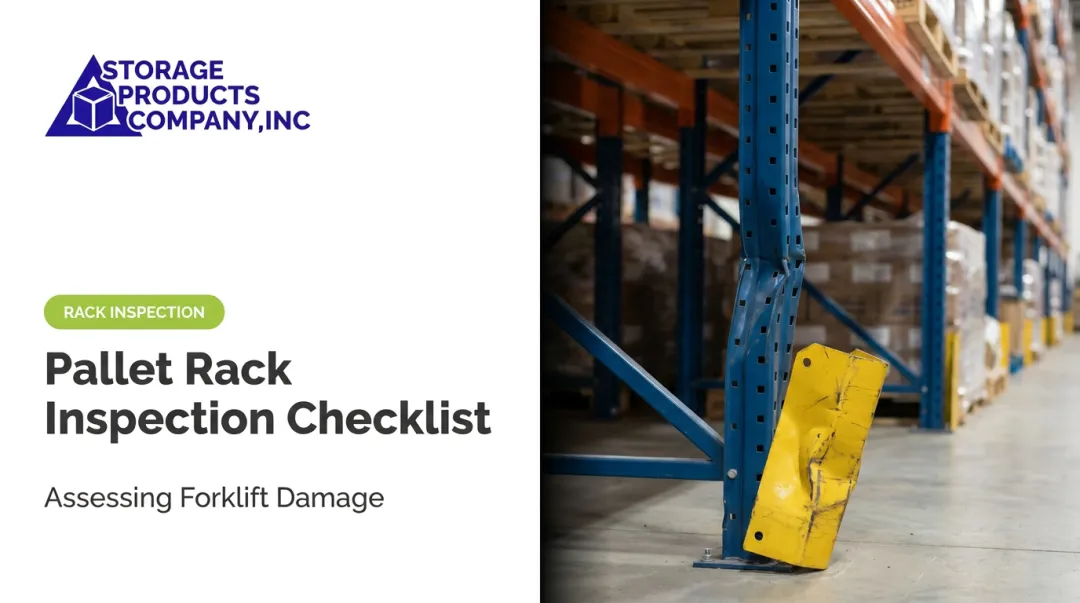
For damaged rack, RMI recommends evaluation by a qualified rack engineer, who may specify a repair kit. Anchors, beam elevations, and plumb should all be checked during reinstallation.
Where a Dealer-Integrator Helps
A storage and material-handling partner can cover the layout, installation, and inspection work. Storage Products Company, based in Mobile, Alabama since 1980, supports rack moves with:
- AutoCAD layout drawings and project management
- Factory-approved, insured installation and rack inspections
- Experience across racking, dock equipment, shelving, VRC lifts, and mezzanines
Represented manufacturers' rack systems are designed to RMI specifications. The company also offers warehouse rack relocation as a service.
It is not a moving company or freight broker, so plan separately for hauling inventory and non-storage equipment, and confirm transport responsibilities in writing.
Coordinate Moving Day and the Phased Transfer
Build the Sequence
Order the move for inventory, racking, conveyors, dock equipment, machinery, IT assets, office materials, and supplies. Keep a live checklist that shows each item's status: shut down, loaded, delivered, installed, tested, accepted.

Phasing helps keep operations running during the move, though savings versus a full shutdown are not fixed. Pick the approach based on your service commitments, not a rule of thumb.
Staff Both Ends
Put a coordinator at each site. Their jobs:
- Direct loading and unloading
- Check destinations against the floor plan
- Enforce safety controls
- Resolve missing or damaged items
- Report delays and scope changes to the project owner
Walk the Old Building
Before handover, do a final walkthrough. Confirm every planned asset is out, utilities and equipment are safely disconnected, inventory records are reconciled, and required documentation is retained.
Validate the New Warehouse Before Full Go-Live
Inspect Physically
Walk the facility and confirm:
- Rack stability and anchoring
- Equipment operation and dock functions
- Travel paths, emergency access, and signage
- Lighting, utilities, and housekeeping
RMI installation guidance treats beam elevation, column anchorage, and alignment as core checks. An independent rack inspection at this stage gives you a third-party record before go-live.
Soft Launch the Processes
Meyer recommends a soft opening to troubleshoot before full production. Run a controlled trial of:
- Receiving, putaway, and replenishment
- Picking, staging, and shipping
- Scanning and inventory transactions
- Equipment charging, maintenance reporting, and system communication
Train, Measure, Review
Train teams on the new layout, location labels, traffic patterns, equipment procedures, and emergency arrangements. OSHA requires powered industrial truck refresher training when a workplace change could affect safe operation, so decide whether new routes and layouts trigger it.
Then measure against WERC's DC measures, including:
- On-time shipments
- Dock-to-stock cycle time
- Backorders
- Inventory count accuracy by location
Compare those metrics before and after the move. Close with a post-move review that logs defects, corrective actions, lessons learned, updated drawings, asset records, and final acceptance.

Frequently Asked Questions
What are the steps involved in the warehouse transfer procedure?
Assess and plan, prepare inventory and equipment, dismantle and transport, install at the new site, test systems, train employees, then restart operations in phases.
What should I include on my relocation checklist?
Scope, responsibilities, schedule, budget, asset and inventory records, new-site assessment, layout, safety, vendors, communications, transport, installation, testing, and contingency plans.
What is the difference between relocation and shifting?
Relocation usually means moving operations to another site. Shifting often describes moving inventory, equipment, or processes within the same facility, or a smaller transfer. Terms vary by organization.
What is relocation in logistics?
It is the planned transfer of a warehouse's inventory, storage systems, equipment, people, and processes while maintaining safety and service continuity.
What is the best way to organize a warehouse?
Base the layout on product characteristics, order flow, capacity, replenishment, equipment travel, and worker safety. Label clearly, and leave room to adapt as needs change.