
The choice shapes picker travel, replenishment effort, inventory rotation, space use, installation cost, and long-term operating efficiency. A wrong match shows up as walking time, stale stock, or a layout you pay to rebuild.
One caution on numbers: you will often see the claim that travel eats roughly 50% of picking time. It traces back to a 2003 Tompkins reference and is not a current U.S. benchmark. Treat it as context, then measure your own travel.
Key Takeaways
- Inclined rollers or wheels bring cartons to the pick face in carton flow; static shelving keeps stock on fixed shelves.
- Choose carton flow for high-velocity, repeatable split-case picks where FIFO matters.
- Use static shelving for lower-volume, irregular, or frequently re-slotted inventory.
- Weigh product size, velocity, labor, safety, space, and payback together.
- Hybrid layouts often beat locking every SKU into one system.
Carton Flow vs Static Shelving: Quick Comparison
| Factor | Carton flow | Static shelving |
|---|---|---|
| Picking method | Load one side, pick the other; cartons advance to the face | Picker retrieves from fixed shelf positions |
| Rotation | Gravity-assisted FIFO | Depends on labeling and discipline |
| Flexibility | Match lanes to carton profile | Adjustable shelves, varied SKUs |
| Maintenance | Inspect rollers, wheels, dividers | Minimal moving parts |
Upfront and ongoing cost
Be wary of anyone quoting a universal U.S. installed-cost range or payback figure for the two systems. Static shelving is mechanically simpler, which usually keeps initial complexity down. Carton flow adds components and layout work up front.
The ongoing side is where they diverge. Shelving can cost more in walking, manual rotation, and floor space in busy zones. Carton flow can cut travel and replenishment effort but needs inspection. Run a facility-specific calculation instead of comparing purchase prices.
Picking method and labor
In carton flow, replenishment happens at the back and picking at the front. Product arrives at the operator, which reduces walking, searching, and reaching. In static shelving, pickers find and pull items directly from assigned slots. That is straightforward, but travel grows quickly in high-volume zones.
Inventory rotation
Carton flow supports FIFO at the lane level, which helps with lot-controlled or frequently replenished goods. Static shelving depends on slotting discipline, labels, and stock-rotation habits.
One catch: for date-sensitive food, USDA guidance says to ship the earliest end date first, even if it arrived later. Receipt-order flow alone does not guarantee that.
Product and SKU flexibility
Carton flow requires matching lane width, roller or wheel type, incline, load rating, and carton bottom condition to the product. Static shelving handles varied dimensions, irregular shapes, and small parts, and shelf heights change easily.
Space, access, and maintenance
Carton flow creates dense, organized pick faces, though moving parts need periodic checks. Static shelving offers direct access and simple upkeep, but may give up density or add floor-level travel depending on SKU arrangement.

What Are Carton Flow and Static Shelving?
What Is a Carton Flow Rack?
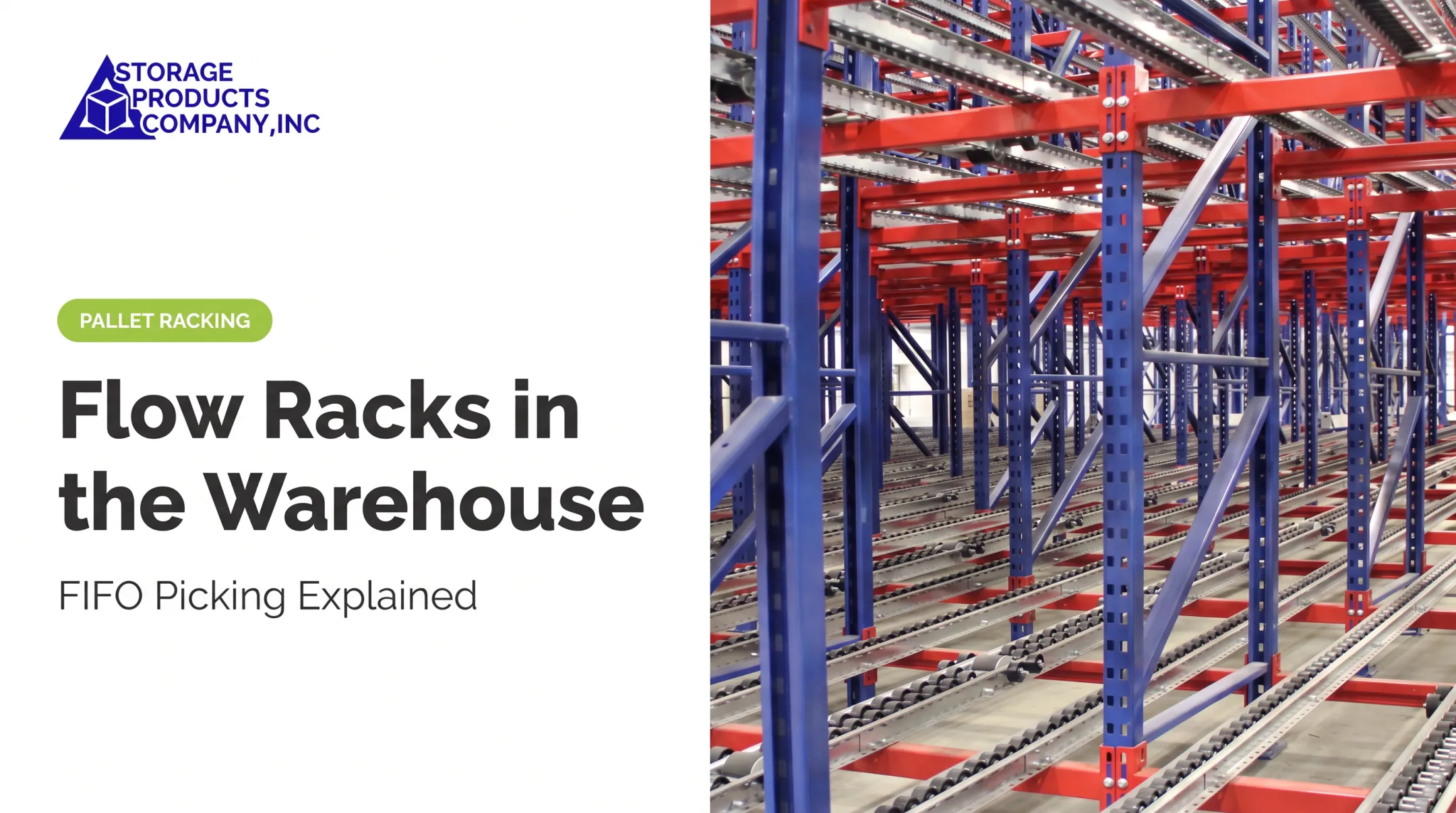
A carton flow rack is a gravity-fed picking system. Inclined rollers, skate wheels, or tracks move cartons, totes, or cases from the loading side to the pick face. It is built for split-case picking, not full pallet storage.
Benefits include:
- FIFO rotation
- Front-facing product visibility
- Less picker travel
- Easier replenishment from the back
Performance depends on proper lane design, load ratings, carton dimensions, and weight. Per manufacturer guidance, full-width rollers suit consistent products, while wheel beds suit varied sizes and flat, sturdy carton bottoms.
Use Cases of Carton Flow
Carton flow fits high-volume pick zones in distribution centers, retail replenishment, kitting, food and beverage, and automotive parts, wherever SKUs have repeatable demand and compatible cartons.
Evidence is mostly vendor-reported. Martin Bros Distributing, a foodservice distributor, reported 15% labor savings after three months with gravity-fed case-flow shelving in a manual walk-pick module. That is a provider's result, not an independent comparison with static shelving.
What Is Static Shelving?
Static shelving keeps products in assigned fixed locations until someone retrieves or replenishes them. It is distinct from pallet rack and gravity-flow equipment.
Strengths: simplicity, direct access, few mechanical parts, adjustability, and broad product compatibility. Penco's Erectomatic line, for instance, lets shelves be repositioned on 1.5-inch vertical centers.
Limits show up in fast zones: more walking, manual FIFO control, and no automated replenishment movement.
Use Cases of Static Shelving
Static shelving suits low- to moderate-velocity items, irregular SKUs, small parts, maintenance supplies, retail backroom stock, and operations that re-slot often.
Independent studies that document a company choosing static shelving for these reasons and measuring the outcome are scarce. The practical logic is simple: if your slotting changes monthly, flexibility can outweigh peak pick speed.
Carton Flow vs Static Shelving: What Is Better for Order Picking?
No universal winner exists. Work through these checks in order.
- Order profile. Compare SKU velocity, line frequency, batch patterns, replenishment frequency, and pickers per zone. Evaluate carton flow first for concentrated, high-volume faces; shelving for slower, less predictable items.
- Product fit. Check carton width and depth, weight, rigidity, bottom condition, tote compatibility, and special handling before specifying flow lanes.
- FIFO and accuracy. Carton flow gives natural rotation and visible faces. Shelving needs stronger labeling, cycle counting, and slotting procedures.
- Facility and safety. Consider aisle width, reach height, load ratings, clearances, replenishment paths, and fire protection.
- Total cost and flexibility. Include equipment, installation, labor, maintenance, error costs, space, reconfiguration, and payback.

Safety and standards
OSHA's grocery warehousing guidance warns that low bins force waist bending, and overhead reaching stresses shoulders and backs. Keep heavy items no higher than mid-chest.
Shelving is covered by ANSI MH28.1, and rack by ANSI MH16.1. Confirm the current edition with the manufacturer.
Sprinkler coverage under NFPA 13 can be affected by solid shelving, so review layouts with a fire-protection designer and your local authority. Have qualified professionals validate the final design.
Cost and layout planning
Storage Products Company uses AutoCAD layout planning and application details to help evaluate shelving, flow rack, and the surrounding material-handling layout, so you can compare options on paper before buying.
Situational recommendations
- Carton flow fits high pick velocity, FIFO needs, reduced travel, and consistent cartons.
- Static shelving fits flexibility, simple access, irregular inventory, or lower complexity.
- A hybrid works when SKU profiles differ across the same facility.
Real-World Examples and Case Studies
Independent head-to-head data is scarce, so the best examples are mixed layouts reported by manufacturers.
A national food wholesaler's UNEX case study combined carton flow and shelving. Results are vendor-reported and the customer is unnamed, but the layout shift was clear:
- Prior layout: 4 SKUs per bay, with up to 500 feet of extra travel per order for slow movers
- New design: 28 SKUs per carton-flow bay and 80 per shelving bay
Fast movers earned flow lanes, while the long tail of slow SKUs fit densely on shelving. Your result still depends on velocity profile, carton mix, and replenishment method, so don't assume the same gains.

If you're weighing a similar split, contact Storage Products Company for a facility review, AutoCAD-supported layout, equipment recommendation, installation, or project quote.
Conclusion
Carton flow is not automatically better. It favors fast-moving, compatible cartons and structured replenishment. Static shelving favors flexibility, direct access, and varied inventory.
Base the choice on outcomes that matter:
- Lower picking effort
- Better space use
- Safer workflows
- Reliable rotation
- Manageable long-term cost
Evaluate the whole order-picking process before selecting equipment.
Frequently Asked Questions
What is a carton flow rack?
An inclined, gravity-fed rack where cartons or totes roll from the loading side to the pick face. It is commonly used for FIFO and split-case order picking.
What is the difference between a pallet flow rack and a carton flow rack?
Pallet flow handles full pallet loads and heavier storage. Carton flow is built for cartons, totes, and cases picked manually at a smaller scale.
How does carton flow compare with static shelving for order picking?
Carton flow presents product at the face, supports FIFO, and reduces travel. Static shelving offers simplicity, direct access, and flexibility.
When is static shelving better than carton flow?
Lower-volume, irregular, frequently changing, or highly varied inventory often fits static shelving better.
Is carton flow more expensive than static shelving?
Costs vary with design, installation, labor, maintenance, and volume. Use a total-cost and payback analysis, not purchase price alone.
How do you choose the right carton flow rack for different carton sizes and weights?
Check carton dimensions, weight, and bottom condition, then match lane width, rollers or wheels, load rating, incline, and speed control. Confirm with the manufacturer and test representative cartons.