
ASME B20.1 is the main US safety standard for conveyors and related equipment, and it contains a VRC-specific appendix. Which requirements apply depends on the VRC design, its use, the install location, the edition in force, and the authority having jurisdiction (AHJ).
This article covers what B20.1 addresses, the major VRC safety provisions, how OSHA and local rules fit in, and what to review before a lift goes into service.
Key Takeaways
- Read B20.1 alongside OSHA, building, electrical, fire, and local rules, not as the only source.
- Guarding, landing gates, interlocks, controls, warnings, installation, and maintenance all need review.
- Confirm the edition, exact clauses, equipment classification, and AHJ expectations before finalizing.
- Qualified installation, commissioning, training, and documented inspections support safe operation.
ASME B20.1 and VRCs: What the Standard Covers
VRC scope and terminology
ASME lists B20.1-2024, Safety Standard for Conveyors and Related Equipment, as the edition in effect. It revises the 2021 edition. Its scope covers conveyor design, construction, installation, maintenance, inspection, and operation, and it excludes conveyors designed or used primarily to move people.
The 2024 table of contents identifies Mandatory Appendix I, "Specifications for Design, Installation, Commissioning, and Periodic Inspection of Vertical Reciprocating Conveyors." That appendix is where VRC-specific requirements live.
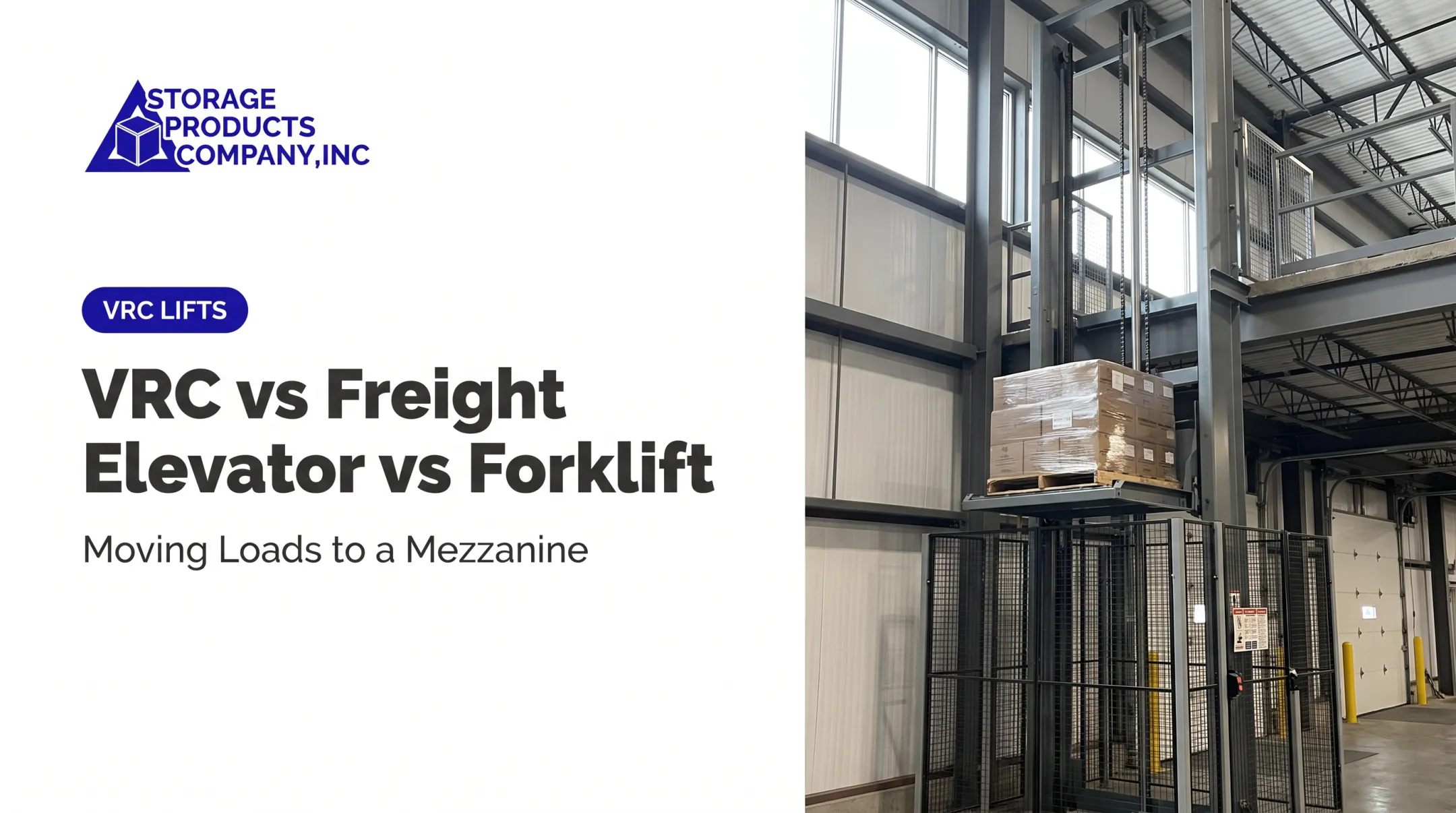
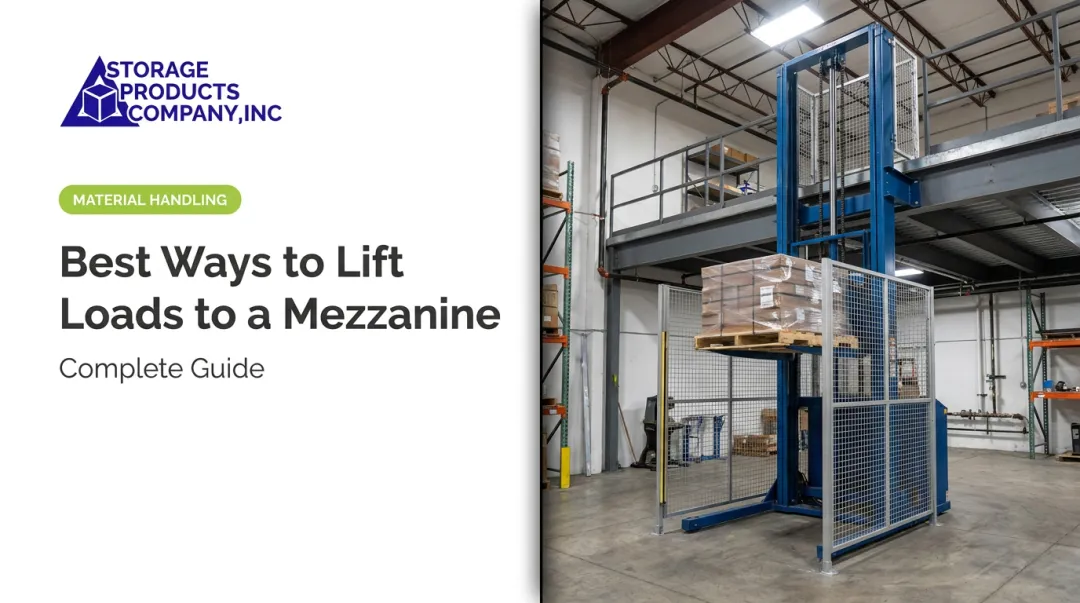
In practical terms, a VRC is a stationary lift that raises and lowers material between levels. The MHI VRC Application Guideline separates VRCs from equipment designed to carry people. Washington State’s rule defines a VRC as a stationary B20.1 lift that moves objects and is not designed to carry passengers or an operator.
How does that differ from an elevator or hoist?
- Passenger and freight elevators fall under ASME A17.1/CSA B44, the elevator safety code.
- That code also has a Part 7 covering dumbwaiters and material lifts.
- "Material-only" is not a complete classification test. Equipment design and local rules decide.
Verify the classification against the manufacturer's documentation and your jurisdiction's rules.
What to verify in the standard
Public ASME materials confirm the edition, scope, and Appendix I title. They do not expose full clause text or inspection intervals. Buy the current edition and read the clauses yourself rather than trusting an undated online summary.
Sort the requirements by who they affect:
- Design: structure, load rating, guarding, interlocks, controls
- Installation: anchoring, clearances, electrical connections, building integration
- Operation: use limits, training, warnings
- Inspection and maintenance: periodic checks, repairs, modifications
B20.1 is one piece of the framework. The surrounding structure, electrical work, fire protection, and workplace operation each have companion requirements, covered below.
Major VRC Safety and Design Requirements
Rated capacity, loading, and structural design
Settle these inputs before choosing equipment:
- Rated load and platform dimensions
- Travel distance and landing configuration
- Loading method (forklift, pallet jack, hand-loaded)
- Duty cycle and operating environment
MHI defines capacity as the maximum load the VRC is designed for, and recommends sizing for working capacity, speed, duty cycle, and platform-mounted accessories. It also calls for checking the supporting building structure. The Appendix I figures include a cantilever design, so structural configuration matters.
For unintended movement, MHI says suspended VRCs must have falling-platform safety devices. It also warns that releasing a brake can let the carriage fall, which is why blocking the carriage during service work matters. Pull exact load-rating, braking, and overload requirements from the B20.1 text itself. Don't borrow numbers from brochures.

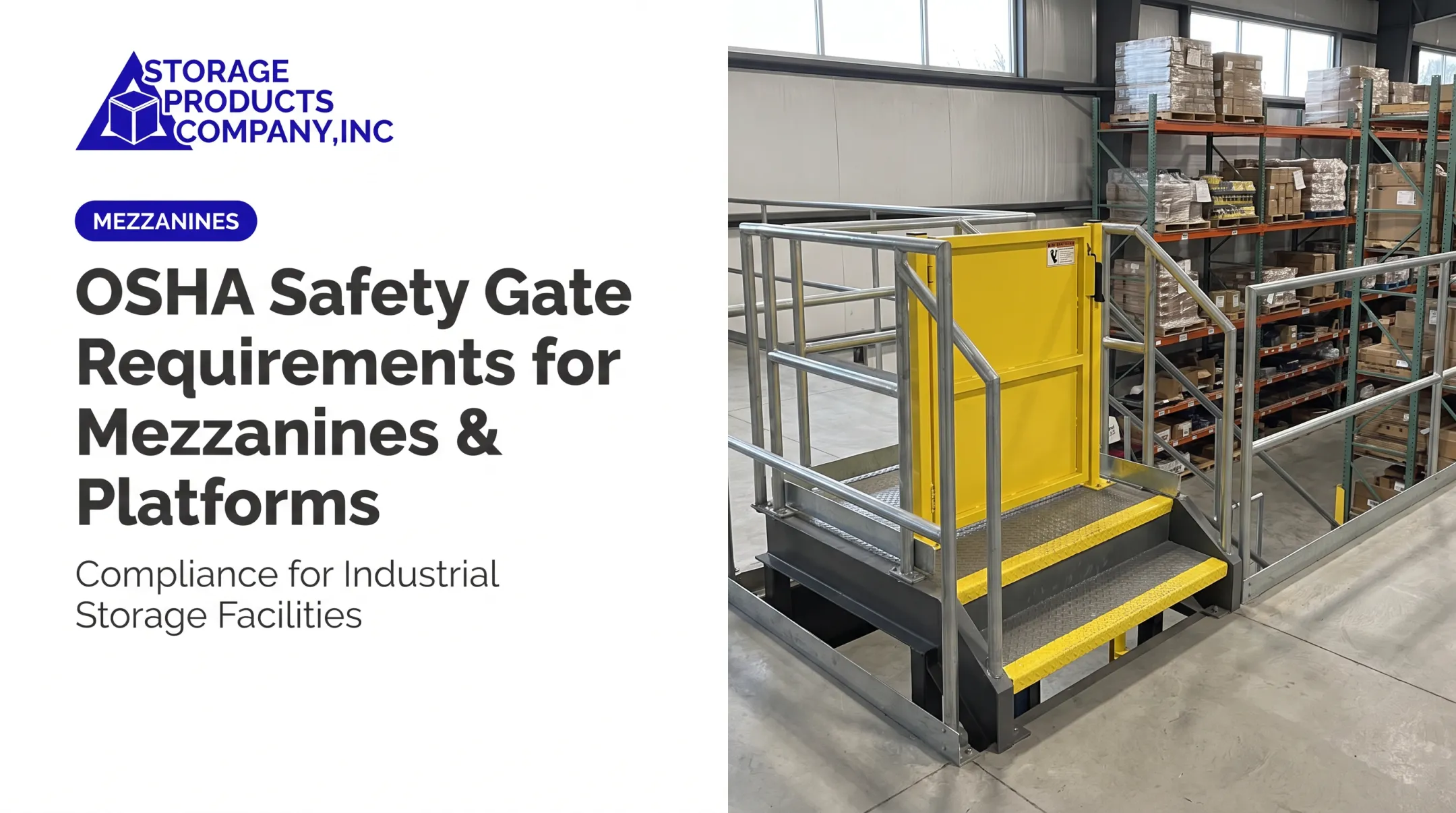
Guarding, enclosures, gates, and landing protection
Guarding keeps people away from falls, crush points, shear points, and moving parts. Look at:
- Platform enclosures and travelway guarding
- Landing gates, barriers, and doors
- Protection at every landing, not just the main one
Interlocks should prevent hazardous operation when a required gate or door is open. MHI describes interlocks on access gates, including electromechanical types.
The stakes are real. OSHA's accident record describes a 2009 fatality where a worker opened a landing door while the carriage was not at that level, after an interlock failed. Confirm exact gate and interlock criteria in the current standard and the manufacturer's documents.
Controls, emergency devices, and warnings
Review these control elements:
- Call/send controls (constant-pressure or momentary-contact options)
- Stop functions and emergency-stop buttons, kept accessible
- Warning signs, including "No Riders"
- Keyed or restricted controls that limit unauthorized use
MHI says nearby personnel should know where the E-stop is and how it works. Its sign list is labeled as recommended. Keep mandatory B20.1 requirements separate from guideline best practice, and check clause text for control placement, resets, and fault conditions.
Installation, inspection, and maintenance
A well-built VRC can still be unsafe if installed badly. Alignment, anchoring, electrical connections, clearances, and guarding all affect safety. MHI says not to operate until the carriage is level and guide beams are plumb and secure.
Cover these in your program:
- Pre-operation checks: level carriage, secure beams, functional gate and interlock tests
- Periodic inspection: Appendix I covers it; confirm the interval in the standard and equipment manual, since no single universal schedule applies to every installation
- Maintenance: follow lubrication schedules, use qualified personnel, apply lockout/tagout
- Parts and damage: replace guards and safety devices before normal operation resumes
- Records and changes: keep logs, and get a qualified review after modifications or incidents

How ASME B20.1 Relates to Other US Requirements
OSHA
OSHA does not blanket-adopt current B20.1. Under 29 CFR 1910.6, OSHA incorporates the 1957 edition for specific provisions only, and only mandatory parts count. Other rules still apply:
- 1910.212: machine guarding
- 1910.147: lockout/tagout, with training and program inspections
- 1910.22 and 1910.28: walking-working surfaces and fall protection at openings
- OSH Act section 5(a)(1): the General Duty Clause
Twenty-two state plans cover private employers, and they must be at least as effective as federal OSHA. Check yours.
Building, electrical, fire, and AHJ
The 2021 IBC lists conveyors under B20.1 and addresses shaft enclosures and limit switches for power-operated conveyors. Local adoption and amendments govern what applies on your site.
Related requirements often include:
- Electrical work under NFPA 70 as adopted locally
- Fire separations, emergency access, and permits
- Final approval from the AHJ
Elevator rules versus VRC rules
State treatment varies widely. Don't assume one standard governs everywhere.
- Colorado: B20.1 VRCs are exempt from its conveyance regulations, though a stricter AHJ may still apply
- Washington: conveyances built to B20.1 are not permitted

Determine whether A17.1/CSA B44 or another lift standard applies based on design, use, and jurisdiction.
A Practical VRC Compliance Process
Define the application before selecting equipment
Collect these inputs first:
- Load type and weight
- Platform size and travel height
- Number of landings
- Loading and unloading methods
- Operating frequency
- Environment (washdown, dust, outdoor, temperature)
- Available space and existing structure
- Expected users
Review the design and documentation
Drawings and submittals should show layout, landings, guards, gates, clearances, controls, electrical needs, rated capacity, support or anchoring requirements, and warnings.
Dealers can help here. Storage Products Company, for example, uses AutoCAD to produce layout drawings that translate site requirements into a documented design. Drawings alone are not code approval, though. That still comes from the standard, engineering review, and the AHJ.
Coordinate with the AHJ and qualified installers
Before fabrication, confirm adopted code editions, permit needs, inspection expectations, and who is responsible for what. Then follow the manufacturer's instructions with qualified installers.
Storage Products Company, for instance, uses factory-recommended, insured installers for Pflow VRC lifts. Verify anchoring, guarding, interlocks, controls, electrical connections, and landing protection at completion.
Commission, train, and maintain
Closeout should include:
- Load, operation, and gate/interlock functional tests
- Inspection records and exceptions
- Operating and emergency instructions
- Training for operators and maintenance staff
- A maintenance schedule and documented corrective work
Pflow's acceptance form is one example. It records load capacity, start-up date, test results, and who was instructed. Any change to capacity, controls, gates, guarding, travel, or loading practice should trigger a documented engineering and compliance review before return to service.

Common VRC Compliance Mistakes
- Trusting the brochure. A "code compliant" label doesn't cover your site conditions, adopted codes, or AHJ expectations.
- Using outdated standards. Citing 1957 or 2021 text when a newer edition governs.
- Skipping design inputs. A lift sized for pallets but later fed with heavier loads from a new forklift.
- Incomplete interlock review. A landing gate at the mezzanine that nobody tested.
- Undocumented field changes. A maintenance crew bypasses a gate switch "temporarily."
- Thin training. Shipping staff who've never seen the E-stop or don't know riding is prohibited. OSHA's 2021 record describes a worker injured while inside a VRC attempting repair.
Be careful with isolated references like "403." ASME B20.1-2024 has no clause numbered 403, and IBC §403 covers high-rise buildings. Trace any such reference to its source, edition, and jurisdiction, and ask the manufacturer, a design professional, or the AHJ.
Frequently Asked Questions
What is code 403 VRC?
An authoritative link between "403" and VRCs is unclear. It could be a clause, regulation, product reference, or search shorthand. Confirm the exact document and current edition before relying on it.
What is ASME B20.1 for VRCs?
B20.1 is the safety standard for conveyors and related equipment. Its Appendix I addresses VRC design, installation, commissioning, and periodic inspection, subject to the current edition and project context.
Are VRCs required to meet ASME B20.1?
It depends on the equipment, intended use, jurisdiction, adopted standards, and AHJ. Verify what applies rather than assuming one standard covers every installation.
Does ASME B20.1 replace OSHA requirements?
No. A consensus standard and OSHA rules serve different roles, and you may need to meet both, plus state-plan, building, electrical, and local requirements.
Can people ride in a VRC?
VRCs are generally intended for material, not passengers. Confirm the manufacturer's classification and any elevator or lift rules that apply to your specific equipment.
What documents should be reviewed before operating a VRC?
Review the applicable standard edition, manufacturer manuals, rated-load information, drawings, guarding and control details, permits or AHJ approvals, inspection records, training materials, and maintenance procedures.