
Introduction
Lumber, plywood, and sheet goods all need a home, and most shops and warehouses pick between two options: store it on edge or store it flat. The choice affects floor space, material condition, retrieval effort, and how safely crews load and unload.
According to a BLS 2024 table, wood product manufacturing recorded 4.2 recordable cases per 100 full-time workers. That is an industry-wide figure, not a storage-orientation measure. Even so, it is a reminder that material handling needs deliberate design.
This guide compares both methods, covers conditions that apply to either, and helps you decide.
Key Takeaways
- Vertical racks suit sheet goods and shorter stock but need anti-tip protection and height clearance.
- Horizontal racks support long boards along their length but take more wall or floor space.
- Stock dimensions, access frequency, layout, and moisture exposure should drive the choice.
- Many operations do best with a hybrid layout.
Vertical vs Horizontal Lumber Storage: Quick Comparison
Neither orientation wins on every factor. Space, access, and damage risk depend on your stock and layout. The comparison below reflects how each system is typically used.
| Factor | Vertical | Horizontal |
|---|---|---|
| Space | Smaller floor footprint; needs ceiling clearance | Uses more depth or wall length; makes use of long wall runs and height |
| Support | Individual slots or a supported back; no unsecured leaning | Multiple supports along the length limit sagging; stickers allow airflow |
| Access | Easy to view and pull single sheets; heavy pieces may need two people or mechanical help | Easy to load long boards onto arms; bottom of a dense stack is hard to reach |
| Cost drivers | Frame, dividers, floor support, anti-tip controls, fixed or mobile | Rack length, arm capacity, anchoring, structural reinforcement, installation |
| Safety | Stable base, restrained loads, clear access paths, no forward falls | Verified load ratings, secure anchoring, even loads, end stops, aisle clearance |

Example rack specs
One Uline commercial vertical sheet rack is listed for plywood and other sheet materials, with four bays, 1,500 lb per bay, and concrete anchoring hardware. Those are model-specific figures, not a category benchmark. Always ask for the specific rack's stability and anchoring documentation.
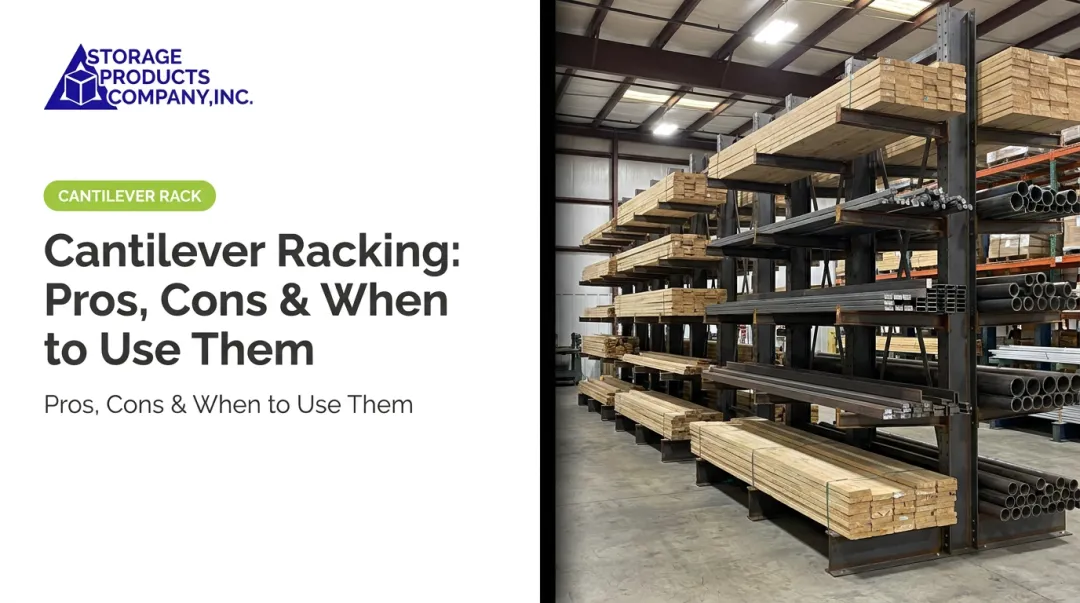
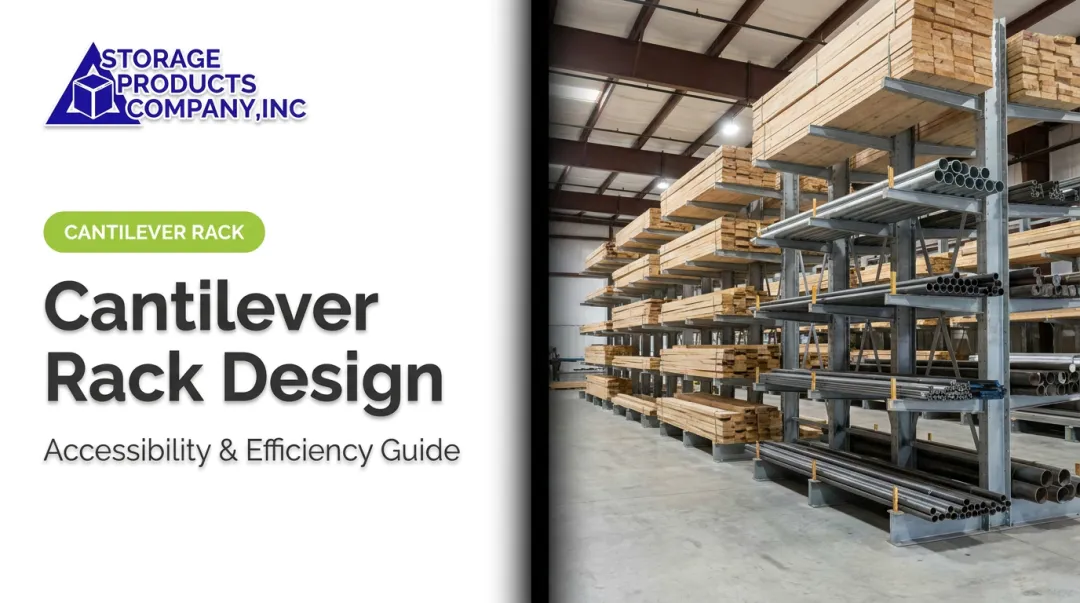
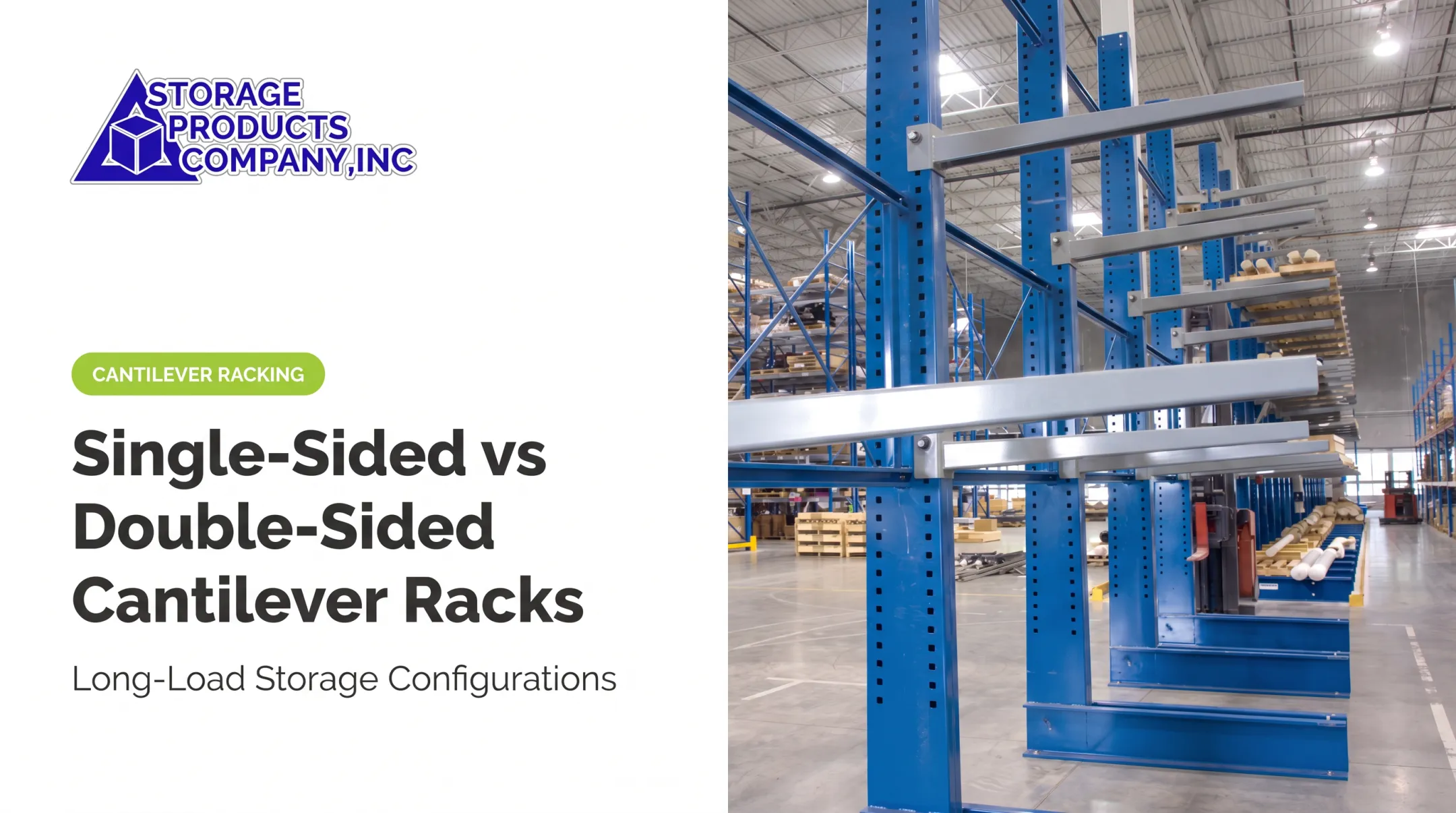
Cantilever racks have an open front for long, bulky, or awkward loads, and their columns don't block the aisle side. Pricing depends on configuration, so request a quote based on your stock.
What Are Vertical and Horizontal Lumber Storage Methods?
Lumber is stored either vertically on edge or horizontally on racks or arms. Dimensional lumber and long boards behave differently from plywood, panels, trim, and short offcuts, so length, width, and weight should guide which orientation you use.
Vertical Lumber Storage
Vertical storage holds material on edge. Common setups include wall-supported bins, slots for sheet goods, freestanding carts, and compartmentalized racks.
The payoff is a smaller footprint and easier sorting. The structure must carry the load and prevent tipping.
Best for:
- Plywood and other sheet goods
- Trim and shorter boards
- Frequently sorted inventory
- Tight floor space
It is a poor fit for very long, heavy, or hard-to-control pieces.
Horizontal Lumber Storage
Horizontal storage uses cantilever racks, wall-mounted arms, tiered shelving, floor-supported racks, or mobile carts. Support is distributed along the board, which suits long stock and can simplify loading from a receiving area.
Best for:
- Long dimensional lumber
- Heavy boards
- Large quantities
- Stock that must stay flat over long storage periods
The tradeoff is more floor, wall, or aisle space.
Storage Conditions That Apply to Both Orientations
Good habits matter more than orientation:
- Raise stock off the floor. The USDA Forest Products Laboratory recommends at least 6 in. above paved floors and 12 in. above unpaved ground for kiln-dried material.
- Protect from moisture and keep airflow around the stock. Stickers are better practice for lumber above 12% moisture content, and green lumber should be stickered.
- Inspect regularly for bowing or damage.
- Sort by size and weight.
- Keep storage away from doors, sprinklers, electrical panels, and exit routes. OSHA requires 18 in. of clearance below sprinkler deflectors, and exit routes must stay unobstructed.

Rack capacity, anchoring, and structural support should come from the rack manufacturer or a qualified professional, not a DIY estimate. Different standards apply: ANSI MH16.1 covers industrial steel storage racks but excludes cantilever racks, which fall under MH16.3.
Vertical vs Horizontal Lumber Storage: What Is Better?
Neither. The right option depends on the material, the facility, how you retrieve stock, and your safety requirements. Work through these four checks.
Check the material
Record length, width, thickness, weight, flexibility, sheet size, moisture sensitivity, and whether it must stay flat.
Measure the space
Measure usable floor area, wall length, ceiling height, loading zones, aisles, doors, columns, and equipment travel paths. OSHA's rule on materials handling requires sufficient safe clearances but sets no universal aisle width, so design to your equipment.
Map the workflow
Consider how often you pull material, whether workers need individual pieces, whether forklifts or carts are involved, and whether the rack sits near receiving, cutting, production, or shipping.
Weigh safety and damage risk
Look at falling-material hazards, overloading, unstable leaning, pinch points, manual lifting, rack impact, anchoring, and end stops. OSHA also requires tiered stacks to be stable against sliding or collapse. RMI recommends a whole-system rack inspection at least annually and monthly checks of vulnerable row ends.

Situational recommendations
- Vertical works when floor space is tight, sheet goods need compartments, or pieces must be identified and separated quickly.
- Horizontal fits when long or heavy boards need continuous support, quantities are large, or you can dedicate wall and rack space.
- Hybrid suits when you handle both long dimensional lumber and plywood or smaller stock.
For commercial facilities, Storage Products Company can help evaluate layouts. Based in Mobile, Alabama, the team uses AutoCAD drawings to clarify space requirements and coordinates storage equipment with factory-recommended, insured installers. They also inspect existing racks and flag conditions that may create safety issues.
Real-World Examples and Case Studies
Lumber-yard case studies show hybrid rack layouts in use, but they do not publish measured vertical-versus-horizontal results. Treat them as design illustrations, not proof.
- Parr Lumber, Damascus, Oregon: Speedrack West used cantilever racks for long lumber and A-frame vertical storage for trim and sheet goods. Standard vertical racks did not fit, so the yard built a custom A-frame with 16-ft frames and 8-ft kick plates and dividers.
- Mead Lumber, Cheyenne: A 2022 project combined a cantilever-supported drive-through building with an A-frame rack for lumber SKUs, sheet goods, and molding.

Takeaway: Both yards ended up with hybrid layouts, matching each rack type to the stock it suits. If your inventory mixes long boards and panels, expect to land in a similar place. Off-the-shelf racks may not fit your products, so custom dimensions can be worth pricing.
If your decision involves commercial rack selection, space planning, or installation, talk with Storage Products Company about a storage-layout review or material-handling project.
Conclusion
Vertical storage is often the better fit for space-efficient, compartmentalized access to sheet goods and shorter stock. Horizontal storage usually wins for long, heavy, or flat-support requirements. A hybrid system is often the most practical answer.
Whatever you choose, aim to:
- Protect the lumber
- Cut unnecessary handling
- Use space well
- Keep workers safe
- Keep material flowing
Before installation, confirm load capacities, anchoring, dimensions, and applicable US safety requirements.
Frequently Asked Questions
Is it okay to store lumber vertically?
Yes, when it sits in a stable, supported rack or compartment with anti-tip protection, safe access, and enough clearance. Unsecured leaning stacks create avoidable hazards.
What's the best way to store lumber?
It depends on length, weight, quantity, storage duration, space, and retrieval needs. Supported horizontal racks suit long boards; controlled vertical racks suit sheet goods and shorter stock.
How can I store plywood vertically?
Use a compartmentalized rack or cart with a stable base, back support, dividers, and anti-tip restraint. Keep sheets off damp floors and use safe handling for full-size sheets.
How do I prevent lumber from warping in storage?
Give it continuous support, keep it off concrete, and control moisture and humidity. Use stickers where appropriate, and avoid unsupported leaning or uneven loads.
Is horizontal or vertical lumber storage better for a warehouse?
It depends on inventory type, rack capacity, aisle layout, equipment access, and retrieval frequency. Choose horizontal, vertical, or hybrid based on your measured workflow, not orientation alone.
What safety features should a lumber storage rack have?
Look for verified load ratings, structural anchoring, stable bases, dividers or end stops, and anti-tip protection. Add clear aisles, regular inspections, and controls for forklift impact.