
Introduction
Edge-of-dock and pit levelers both bridge the gap between a dock and a trailer. They do it for different operating conditions.
Pick the wrong one and the problems show up fast: steep slopes, forklift clearance trouble, installation surprises, premature wear, and slow loading. Trailer-bed heights alone can vary by roughly 30 inches across a mixed fleet.
This guide compares sizes, capacity, measuring requirements, installation, and best-fit applications, so you can narrow the choice before you talk to a dealer.
Key Takeaways and Quick Comparison
- Edge-of-dock levelers suit consistent trailer heights and retrofits with minimal concrete work.
- Pit levelers handle wider height variation and heavier, more frequent traffic.
- Published ratings run 20,000-35,000 lb for edge-of-dock examples and 30,000-45,000 lb for pit models.
- Verify every dimension and rating against the manufacturer's current spec sheet.
| Factor | Edge-of-dock | Pit |
|---|---|---|
| Mounting | Dock face/curb | Recessed pit |
| Typical vertical range | About ±3 in. recommended, ±5 in. max (examples) | About ±12 in. (examples) |
| Installation | Less concrete work | Pit required or existing |
| Best fit | Uniform fleets, retrofits | Mixed fleets, high volume |
Cost and installation
Neither option has a universal price. Pricing depends on model, controls, and site work, so request quotes against your actual dock.
Edge-of-dock: Face-mounting usually means less concrete and pit work, which matters on an existing dock. One manufacturer describes a curb channel embedded in the concrete at the dock face.
Pit: A recessed unit needs a formed opening sized to the model. In a retrofit, that can mean structural preparation and more extensive work. Replacing an existing pit leveler is simpler if the new unit fits the existing pit dimensions.
Power also affects scope. A hydraulic edge-of-dock model, for instance, uses a wall-mounted push-button panel, while air-powered pit units need air and electrical supply.
Operating range and size
The dimensions that matter are deck width, length, lip projection, operating height range, and, for pit units, the pit opening.
Edge-of-dock examples:
- Widths of 66-84 in. and platform lengths of 104-122 in.
- A 15-in. standard lip, with a 17-in. option for refrigerated trailers on one model
- Recommended range of ±3 in., maximum ±5 in.
That narrow range makes truck-bed consistency important. If trailer heights drift beyond it, the lip may not engage well or the slope may exceed what your equipment handles.
Pit examples:
- Kelley's CM series offers nominal widths of 6, 6.5, and 7 ft and lengths of 6, 8, and 10 ft.
- Vertical range is 12 in. above and 12 in. below dock level on 6- and 8-ft units, and 18 in. above on 10-ft units.
- Its lip extends at least 11 in. beyond the face of a 4-in. bumper.
Length drives slope. Kelley's planning guidance says to divide the height difference by your equipment's maximum grade capability to find the needed length. Poweramp's guide suggests keeping driveway approaches at 6% or less. Don't treat ±5 in. of edge-of-dock travel as a 5-degree slope limit.

Load capacity
Rated capacity is a spec to verify, not assume. A smaller or lower-profile unit isn't automatically fine for lighter loads, and not every pit leveler carries the same rating.
Blue Giant's selection checklist covers:
- Forklift weight with battery, plus attachments
- Heaviest load
- Three- vs four-wheel equipment (narrow wheels concentrate load)
- Speed, approach direction, and dock-to-trailer height difference
Blue Giant also offers a manufacturer heuristic (not an ANSI formula): multiply vehicle weight plus load by 2.5 for light use, 3-4 for normal to heavy use, and 4-5 for high frequency, steeper grades, or higher speed.

Capacity terms vary too, such as rated, dynamic, and rollover, so confirm which one a spec sheet reports.
High-volume or heavy-duty docks often call for a higher-capacity configuration, but only the model's published rating settles it.
Flexibility and operational fit
Neither type is better across the board. They fit different docks.
- Edge-of-dock: Relatively consistent dock and trailer heights, limited variation, lower-to-moderate traffic, and retrofit constraints.
- Pit: Mixed trailer fleets, wider height variation, frequent loading, and facilities needing more operating flexibility.
Trailer bed heights vary by type. Nova lists:
- City semitrailers: 44-48 in.
- Road semitrailers: 48-52 in.
- Refrigerated: 50-60 in.
- Containers: 56-62 in.
Freight weight can shift bed height by up to 6 in. A dock serving only one of those types is a candidate for edge-of-dock. A dock serving several probably isn't.

Maintenance and safety
Both types need regular inspection. One manufacturer manual calls for weekly full-cycle operation and hinge checks, with quarterly checks of welds, pins, toe guards, bumper wear, and weather seals.
Edge-of-dock concerns:
- Exposed components and lip engagement
- Pallet jack and forklift clearance
- Confirming safe operating limits
Pit concerns:
- Debris, which the manual says to sweep from the pit
- Drainage and seals
- Maintenance access
Both need vehicle restraint and wheel chocking. OSHA's 29 CFR 1910.178 requires brakes set and wheel blocks placed during loading, and fixed jacks may be needed for uncoupled semitrailers.
What Is an Edge-of-Dock Leveler?
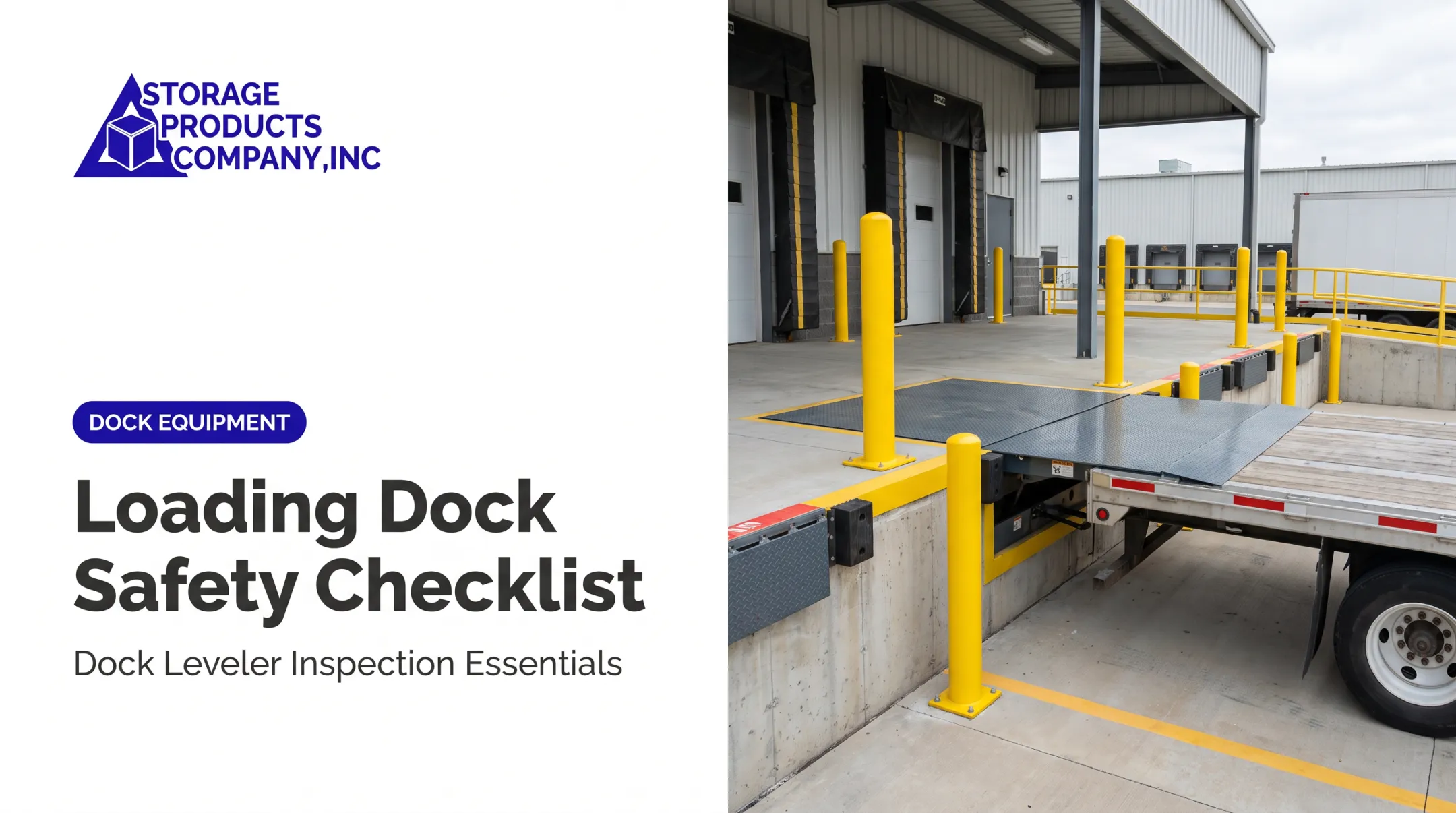
An edge-of-dock (EOD) leveler mounts at the dock face and forms a transition ramp to the trailer. It differs from a portable dock plate or dockboard. Blue Giant describes a dock plate as a plate without added supporting members, generally for lighter loads, while a dockboard has side members for added support.
Size and capacity
There is no single universal size. Published examples include a mechanical series with 66-, 72-, and 78-in. widths and 20,000-30,000 lb ratings, and a hydraulic series up to 84 in. wide and 35,000 lb. Check each model's operating range, lip projection, and mounting footprint.
Select capacity from your actual equipment: forklift gross weight, maximum load, attachments, wheel configuration, traffic frequency, and speed. Use the manufacturer's method.
Benefits and tradeoffs
Benefits:
- Simpler installation with less site disruption
- Mechanical and hydraulic options available
Tradeoffs:
- Limited height compensation versus pit levelers
- Dock-face clearance required for mounting
- Poor fit for highly variable trailer fleets
Use cases
EOD levelers fit an existing warehouse or distribution dock serving a fairly uniform fleet, where concrete modification is limited.
A Centex Material Handling case study from a Central Texas distribution facility shows this. The facility had no levelers and couldn't unload safely at the dock. Edge-O-Dock units restored fully functional bays, with no delivery-schedule delays reported.
What Is a Pit Leveler?
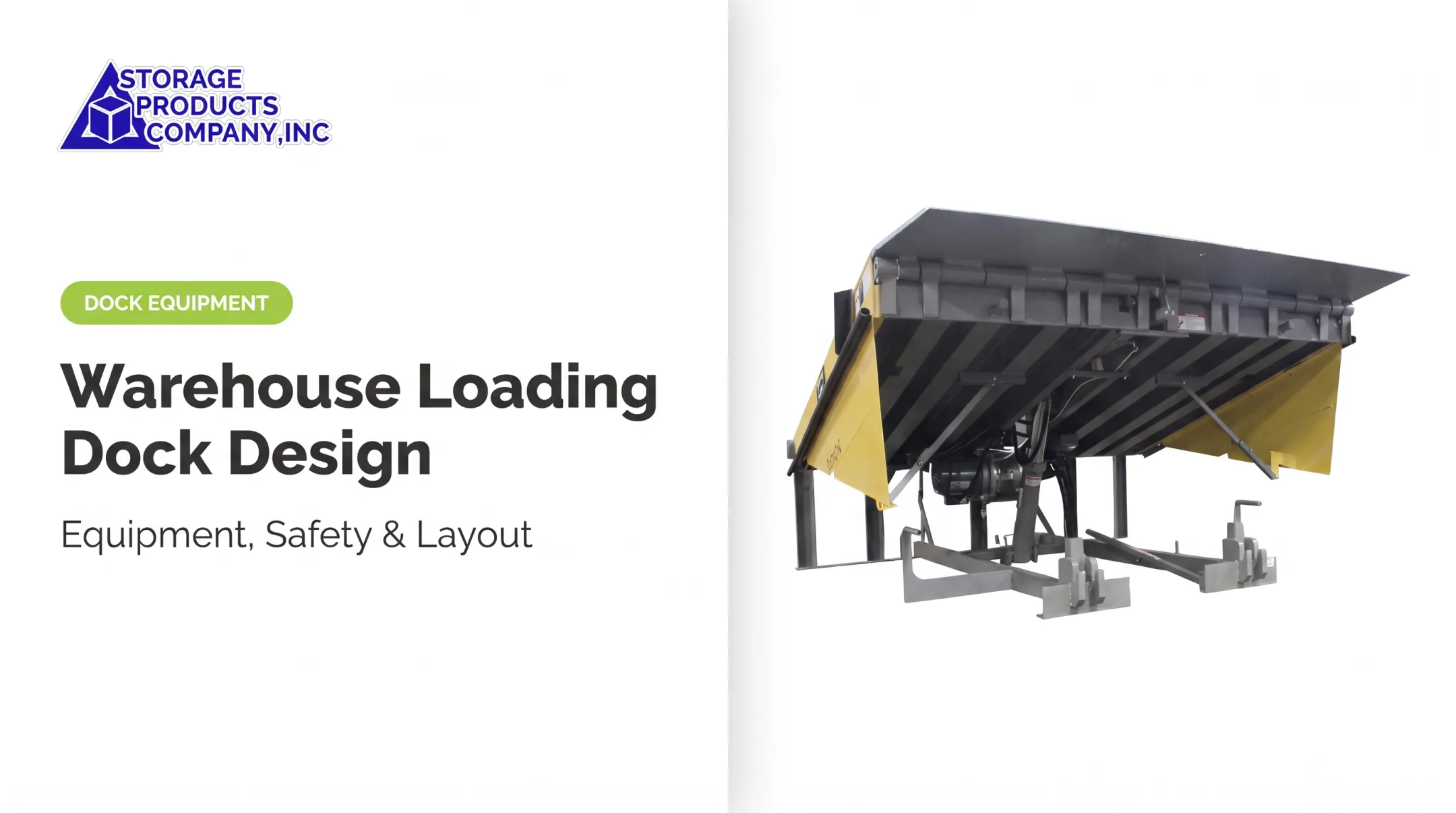
A pit leveler sits in a prepared recess so its deck is flush with the dock floor. The deck and lip bridge the gap to the trailer while following the trailer's movement during loading.
Dimensions to specify
- Leveler length, width, and lip projection
- Pit opening and depth
- Dock height
- Required range above and below dock level
Dimensions are model-specific. Blue Giant's A-series air-powered examples show a 72 x 75.5 in. deck in a 74 x 63 in. pit, and a 72 x 99.5 in. deck in a 74 x 87 in. pit. Those are model examples, not a universal pit standard.
Capacity selection follows the same logic as above: vehicle weight, load, wheel loads, attachments, speed, traffic intensity, and the angle at which equipment crosses.
Common configurations
- Mechanical: pull-chain activation, suited to standard applications
- Hydraulic: push-button operation
- Air-powered: electro-pneumatic deck movement and lip deployment
- Hinged or telescoping lip: NORDOCK describes a telescoping-lip model that can extend or retract the lip at any time
- Vertical-storing: stores upright, which can help seal the door

Availability varies by manufacturer, and not every type fits every facility. Dock Systems Inc., a vendor Storage Products Company represents, offers mechanical and hydraulic pit levelers.
Use cases
Pit levelers are common in new construction, high-throughput distribution, manufacturing, and cold-chain facilities with mixed trailer heights.
A Kelley case study covers Glazier Foods in Houston, a new food and beverage distribution facility. The site needed safe truck access, door protection, and wash-down capability, so vertical levelers were specified.
Reported benefits included easier cleaning, door protection, better temperature control, and complete door sealing. These are qualitative claims, not measured savings.
Edge-of-Dock vs Pit Leveler: What Is Better?
Choose the leveler that matches your trailers, equipment, traffic, dock construction, safety requirements, and lifecycle budget. The lower initial price shouldn't decide it.
Measure first
- Record the fixed dock height. Blue Giant says 48-52 in. is most common.
- Measure the lowest and highest trailer-bed heights, loaded and unloaded.
- List expected trailer types and equipment wheelbase, ground clearance, and maximum grade capability.
- Note lip contact needs, bumper projection, and bay width. Blue Giant puts door centers at 12-14 ft.
- Confirm available pit or mounting space. For pit replacement, Beaton asks for pit width, length, and separate front and rear depths.
Capacity and lifecycle cost
Use the manufacturer's capacity method with combined equipment and load weight, not trailer payload. Account for dynamic use and attachments.
Lifecycle cost includes:
- Concrete work
- Electrical or hydraulic needs
- Maintenance access
- Parts
- Downtime risk
- Climate control
- Cost of adapting the dock if your fleet changes

Safety and compliance
Check the applicable requirements before ordering:
- OSHA 1910.26 requires dockboards to support the maximum intended load, with run-off protection on newer boards unless no hazard exists
- ANSI MH30.1-2022 covers performance and testing of dock leveling devices
- Manufacturer, building-code, and bumper requirements
- Operator training
Don't select a leveler from dimensions alone.
Situational recommendations
Choose edge-of-dock when:
- The fleet has a narrow, predictable height range
- You need a retrofit with minimal construction
- Volume and equipment fit the manufacturer's limits
Choose a pit leveler when:
- Trailer heights vary widely
- Loading is frequent or equipment is heavy
- You need greater lip reach, or a new build allows a recessed system
Storage Products Company can support application review, layout planning, and dock-equipment selection, including AutoCAD drawings, with factory-recommended, insured installers.
Real-World Examples and Case Studies
The two cases above show the split.
Central Texas facility: No usable levelers and restricted unloading. Edge-of-dock units restored the bays quickly.
Glazier Foods: A new build with wash-down and temperature-control needs. Vertical pit levelers fit the application.
Neither case includes quantified savings. Use them as decision examples, not performance benchmarks.
When each option fits:
- Consistent fleet and retrofit constraints favor edge-of-dock
- Mixed fleet, high volume, or a new build favors a pit leveler
Want a second opinion on your dock? Share your dock dimensions, equipment, and capacity needs with Storage Products Company at (251) 973-9101.
Conclusion
Edge-of-dock levelers are practical for consistent, less construction-intensive applications. Pit levelers generally offer more flexibility when height variation, traffic, or equipment demands run higher.
Before ordering, verify measurements, capacity, operating range, lip engagement, safety requirements, and lifecycle costs against current manufacturer specifications.
Frequently Asked Questions
What is the standard size of a dock leveler?
There isn't one. Size varies by leveler type, dock design, trailer profile, and manufacturer. Chalfant lists widths of 6, 6.5, and 7 ft and lengths of 5, 6, 8, and 10 ft, with 6 ft most common.
How to measure a dock leveler?
Measure dock height, the trailer-bed height range, leveler width and length, lip projection, and bumper projection. Add equipment clearance, required capacity, and any pit or mounting dimensions.
What are the different types of dock levelers?
Types include edge-of-dock and recessed pit units, in mechanical, hydraulic, or air-powered versions. Lips can be hinged or telescoping, and some units store vertically. Not every type fits every facility.
What are the standard dimensions of a dock?
Dock dimensions include dock height, bay width and spacing, door size, apron space, leveler size, and bumper projection. Most trucks suit 46-52 in. dock heights. The right numbers depend on the vehicles and equipment you serve.
What is the standard size of a dock door?
Common doors are 8 ft wide and 8, 9, or 10 ft high. Nova specifies at least 8 ft 6 in. width for full trailer-interior access. Match the door to your largest trailer, load profile, and site conditions.