
Longspan racking fills that gap. It creates wide, adjustable shelf levels for manually handled goods. Some manufacturers sell comparable systems as "wide span" or "long-span shelving." This guide covers what the system is, where it fits, how to choose dimensions and capacity, and what to review for safety before installation.
Key Takeaways
- Longspan racking suits bulky, hand-loaded goods that outgrow shelving but don't need pallet racking.
- Choose bay size, decking, and capacity from your actual inventory, not assumed standards.
- Adjustable levels, labels, bins, and dividers improve space use and picking.
- Follow manufacturer ratings, site requirements, and US safety guidance.
What Is Longspan Racking?
What longspan racking means in a warehouse
Longspan racking is a steel storage system built from upright frames and horizontal beams. It forms relatively wide shelf levels for cartons, containers, parts, and other bulk items that workers handle by hand.
Terminology overlaps. Penco markets a comparable product as Wide Span and positions it between conventional shelving and pallet rack. AR Racking and Dexion use "Longspan." Specifications and load ratings differ by manufacturer, so a shared name never guarantees shared performance.
How it differs from standard shelving and pallet racking
| System | Typical load unit | Handling |
|---|---|---|
| Conventional shelving | Smaller, lighter items | By hand |
| Longspan racking | Larger hand-loaded goods | By hand, direct access |
| Selective pallet rack | Palletized loads | Usually material-handling equipment |
"Heavy duty" doesn't automatically mean a system can take pallets or forklifts. Confirm the approved use in the manufacturer's capacity documentation. Storage Products Company's bulk storage product, for example, is hand-loaded and not intended for use with mechanical equipment.
Main components
- Upright frames with posts and braces
- Horizontal beams and beam locks or connectors
- Decking that carries the product
- Anchors, labels, and optional dividers or bins
Beams sit at adjustable positions, so you set shelf levels to the product. Decking choice affects load distribution and how well different shapes sit. Penco's published specification, for instance, lists beam adjustment on 2-inch vertical centers, though that figure belongs to its product alone.
Bulk hand-loaded uses and future flexibility
Open, wide bays handle automotive parts, boxed inventory, maintenance supplies, retail back-stock, and manufacturing components that are awkward on narrow shelves. Separate what workers lift individually from loads that need carts, ladders, lifts, or other approved equipment.
Adjustable beams also let you re-space levels as packaging or SKU mix changes. Plan spare bays, compatible accessories, and consistent labeling now so the system grows without turning into clutter.
Why Longspan Racking Works for Bulk Hand-Loaded Storage
Better use of vertical space
Well-planned levels use building height while keeping frequently picked items within easy reach. Maximum height isn't the goal. Balance density against worker access, aisle clearance, lighting, fire protection, and safe access to upper levels.
Faster identification and picking
Open shelf faces, labels, SKU zones, bins, and dividers cut searching time. Put fast movers in convenient positions and reserve high or hard-to-reach levels for slower items.
A 2005 simulation study found notable order-fulfillment time savings when high-demand SKUs were slotted at accessible heights. It was a simulation of bin shelving, not a longspan field trial, but the principle carries over.
Flexibility for different sizes
Adjustable levels and alternative decking handle cartons, totes, loose parts, and irregular items. One facility might set it up like this:
- Small parts: tight level spacing with bins or dividers
- Medium cartons: mid-height levels sized to the carton plus clearance
- Bulky products: wide, low levels with open decking
Mixed picking and reserve storage
A carefully designed system can hold active pick locations and reserve stock together. Heavier or harder-to-reach loads may need approved handling equipment. Where pedestrians and forklift or cart traffic share an area, separate them.
Applications by facility type
- Distribution centers: varied SKU dimensions
- Retail back rooms: seasonal overstock in limited floor space
- Warehouses: mixed bulk cartons alongside palletized stock
- Manufacturing: component staging near the line
- Automotive parts distributors: high parts variety
Dexion's OHM Group case in Ireland paired 150 bays of longspan for larger parts with 500 bays of shelving for small ones. No single configuration suits every site.

How to Configure Longspan Racking for Your Facility
Start with the inventory and handling profile
Gather the details that drive bay and shelf choices:
- Product and packaged dimensions, unit weight, and quantity per SKU
- Packaging strength, turnover, and picking frequency
- Whether items are lifted singly or moved in containers
- Future needs: new lines, seasonal peaks, changing carton sizes, and growth
Select bay width, depth, and height
There is no universal "standard size." Published examples show the spread. Dexion lists frame heights of 2,000 to 5,000 mm (about 6.5 to 16.5 ft) and depths of 450 to 1,200 mm (about 18 to 47 in). Penco lists beams in 4 to 8 ft lengths. Those are individual products, not norms.
Aim for usable clearance without dead space, unstable overhang, blocked visibility, or awkward reaches. Also separate nominal product size from clear internal storage size, since frames, beams, decking, and labels all eat space.
Verify shelf and bay capacity
Per-level capacity and total bay capacity are different numbers. Don't mix rating bases.
Dexion states shelf loads up to 900 kg (about 1,980 lb) uniformly distributed and up to 4,500 kg (about 9,900 lb) per bay. Penco's cited 7,500 lb figure is a frame capacity at beam spacing of 60 in or less. Don't infer point-load ratings from either.

Confirm capacities from current manufacturer documentation and posted load labels, never from another system.
Choose decking and accessories
Decking options include steel, wire mesh, and wood-based panels such as plywood or particleboard. Each affects load distribution, visibility, cleaning, and product protection. Some require specific beams or supports, so verify with the manufacturer.
Accessories worth considering:
- Bins and dividers for small parts
- Labels and end panels
- Guard components
- Carts and approved access equipment
Pick only what supports your workflow, and confirm compatibility with the frame and beam system.
Plan aisles, pick zones, and traffic flow
Before finalizing, map the paths and clearances that shape the layout:
- Pedestrian aisles, cart routes, and forklift paths
- Emergency access, columns, and doors
- Lighting, sprinkler clearances, and staging areas
Fast movers, bulky items, and often-replenished locations may need different placement and access rules.
Test and install
Pilot a bay with representative products. Check reach, visibility, replenishment, picking sequence, and worker movement before rolling out. A professional layout then locks in accurate measurements, AutoCAD drawings, equipment clearances, anchoring requirements, installation sequencing, and an expansion plan.

Safety and Operating Practices for Hand-Loaded Racking
Stay within rated loads and approved configurations
Read the load labels. Respect shelf and bay ratings, spread loads evenly, and observe overhang limits. Don't modify beams, decking, or accessories without manufacturer approval.
Verify OSHA, ANSI, building, fire, seismic, and local requirements for your site. Rules differ by jurisdiction and system type.
For example, ANSI MH28.1 covers bin shelving while MH16.1 covers industrial steel storage racks, so scope depends on the system's design and use. Los Angeles County requires permits for racks over 5 ft 9 in, a local rule rather than a national one. The 2024 IFC sets high-piled storage rules that apply above 12 ft in many cases.

Design for safe manual handling
- Keep heavier or frequently handled items in lower or mid-level locations
- Avoid excessive reaching and twisting
- Keep walkways clear
- Provide approved ladders, platforms, or lifts for upper levels
OSHA's materials-handling guidance places manual lifting in a "power zone" from about mid-thigh to mid-chest. NIOSH's lifting equation is a task-risk tool, not a shelf rating. Tie both to your products, tasks, and injury-prevention program.
Overexertion is the most common warehouse hazard identified in GAO's 2024 review.
Inspect and maintain
Check routinely for:
- Damaged uprights and bent beams
- Loose connections
- Displaced decking
- Missing labels
- Impact damage, unstable loads, and blocked aisles
RMI guidance for pallet rack suggests a full inspection at least annually, with more frequent checks in damage-prone areas. Treat that as a reference point, not a rule for every product.
When damage appears, report it, unload the bay if needed, and block off the area. Have qualified personnel repair or replace parts per the manufacturer's instructions.
Longspan Racking vs. Other Storage Options
When longspan is a strong fit
Longspan is a strong fit when:
- Products are bulky or varied in size
- Workers need direct hand access to every bay
- Inventory is not consistently palletized
- Basic shelving cannot supply enough capacity
Choose a different system when:
- Loads require palletized forklift handling
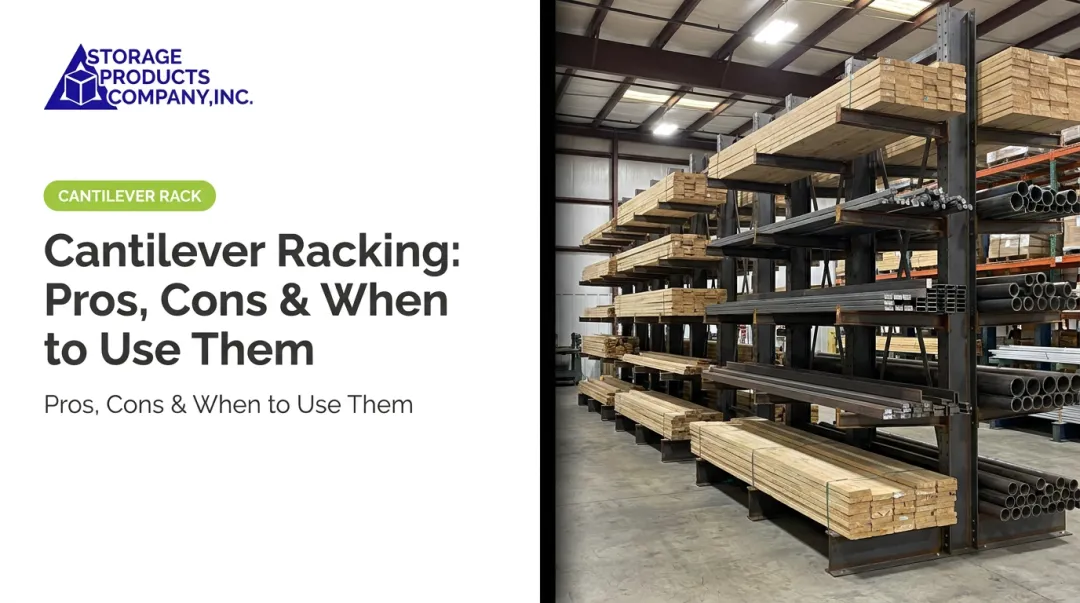
- Products are unusually long (cantilever racking suits those)
- You need a full elevated floor (a mezzanine is the better path)
Comparing the alternatives
| Option | Load unit | Access | Best for |
|---|---|---|---|
| Boltless shelving | Small, light items | By hand | Light-duty parts |
| Longspan | Bulky hand-loaded goods | By hand | Varied cartons, parts |
| Selective pallet rack | Pallets | Equipment | High SKU selectivity |
| Cantilever | Long items such as pipe, lumber | Arm-supported | Variable lengths |
| Mezzanine | Elevated floor area | Stairs, catwalks | Added floor space |

No option wins everywhere. Inventory profile, handling equipment, building conditions, throughput, budget, and future growth all shape the right choice.
Get design and installation support
Storage Products Company, based in Mobile, Alabama, has more than 43 years in the industry. It provides AutoCAD layout drawings, project management, and installation through factory-recommended, insured installers. Its layout service assesses your material-handling and storage requirements and recommends equipment to match.
If you're weighing a longspan plan, you can talk through your facility requirements with the team.
Frequently Asked Questions
What is longspan racking?
It's an adjustable, wide-bay shelving or racking system for hand-loaded products. It handles larger goods than light-duty shelving but isn't designed around pallets like pallet racking.
What are the standard sizes of longspan racking?
There's no universal standard. Compare available width, depth, height, beam spacing, clearances, and load ratings for your chosen manufacturer and application.
Is longspan racking suitable for bulk hand-loaded storage?
Yes, often. Adjustable, open bays suit bulky or varied products handled manually, but check load weight, product dimensions, worker reach, and access needs first.
How much weight can longspan racking hold?
It depends on the frame, beams, decking, configuration, and load distribution. Rely on current manufacturer ratings and posted load labels.
How do I choose the right longspan racking dimensions?
Start with product dimensions and clearances, then factor in shelf height, bay width and depth, aisles, handling equipment, building conditions, and expected inventory changes.
What is the difference between longspan racking and pallet racking?
Longspan racking is commonly used for hand-loaded products with direct item access. Pallet racking is built around palletized loads and compatible material-handling equipment.